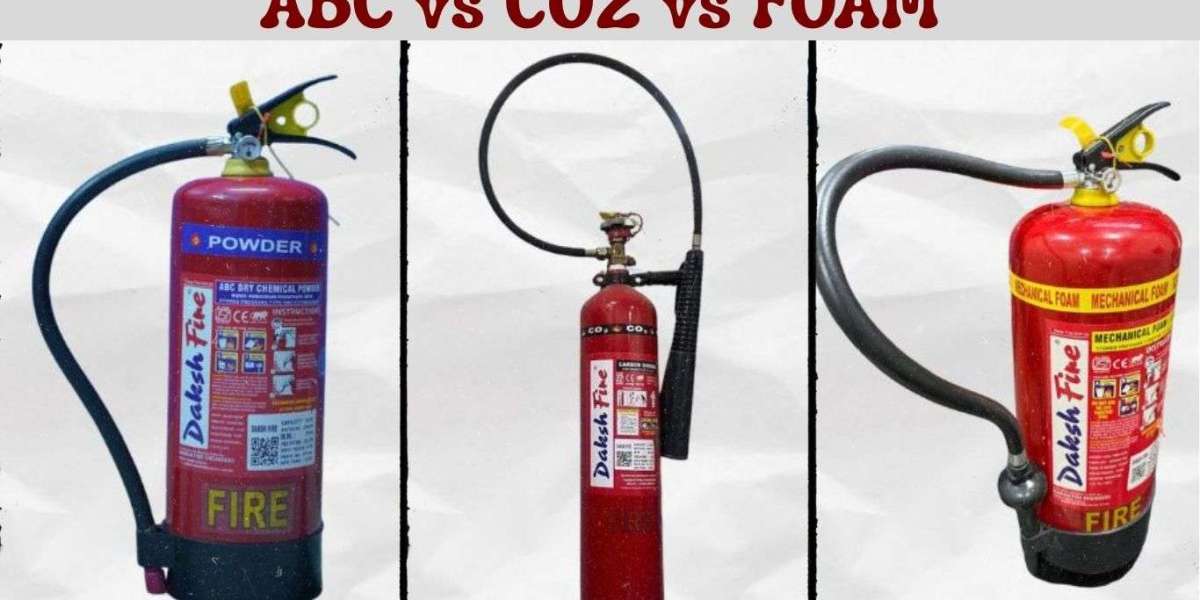

Choosing the right fire extinguisher is essential for ensuring safety at home, in offices, shops, warehouses, server rooms, commercial kitchens, and industrial spaces. With multiple extinguisher types available, it can be confusing to know which one is best suited for your environment. Among the most commonly used are ABC Dry Powder Extinguishers, CO₂ Extinguishers, and Foam Extinguishers.
Each extinguisher works differently, fights different fire classes, and is designed for specific hazards. In this guide, we’ll break down the difference between ABC, CO₂, and Foam extinguishers, their uses, advantages, limitations, and how to choose the right one based on your needs.
Why Choosing the Right Fire Extinguisher Matters?
Every fire behaves differently depending on the source of fuel. That’s why fire extinguishers are classified based on the types of fire they can control:
- Class A: Solid combustibles like paper, wood, cloth, rubber
- Class B: Flammable liquids like petrol, paint, diesel, chemicals
- Class C: Flammable gases like LPG, CNG, propane
- Class E: Electrical fires
- Class F/K: Cooking oil fires
Using the wrong extinguisher can make the fire worse or even cause an explosion. This is why understanding each extinguisher type is crucial for fire safety.
1. ABC Dry Powder Fire Extinguisher: The All-Purpose Solution
Best for:
Class A (solid fires)
Class B (flammable liquids)
Class C (flammable gases)
The ABC Dry Chemical Powder extinguisher is one of the most widely used fire extinguishers because it handles multiple fire types. It contains monoammonium phosphate powder, which quickly smothers flames and stops the chemical reaction within seconds.
Where to Use ABC Extinguishers
- Homes and apartments
- Offices and shops
- Schools and colleges
- Small factories and warehouses
- Vehicles and commercial fleets
- LPG storage areas
It’s especially helpful in environments where different fire hazards may occur.
Advantages
- Works on three major fire classes: A, B, and C
- Immediate flame knockdown
- Highly effective for mixed fire risks
- Affordable and widely available
Limitations
- Leaves powder residue that may damage electronics
- Not suitable for server rooms, electrical rooms, or precision equipment
- Can reduce visibility during discharge
If you want a general-purpose extinguisher, an ABC extinguisher is usually the safest and most practical choice.
2. CO₂ Fire Extinguisher: Best for Electrical & Electronic Fires
Best for:
Class B (flammable liquids)
Class E (electrical fires)
A CO₂ (Carbon Dioxide) extinguisher is specifically designed to handle fires involving electrical equipment and flammable liquids. It works by displacing oxygen—the element a fire needs to burn—thereby suffocating the flames instantly.
Where to Use CO₂ Extinguishers
- Server rooms and data centers
- Electrical panels and control rooms
- Offices with computers
- UPS rooms and IT racks
- Laboratories
- Machine rooms
Because CO₂ is non-conductive and leaves no residue, it is safe for electronics.
Advantages
- No residue — no cleanup required
- Safe for electrical and electronic equipment
- Instant flame control
- No damage to machinery or data
Limitations
- Not suitable for Class A fires (wood, paper, cloth)
- Not effective outdoors due to wind
- Short discharge time
- Risk of cold burns if handled incorrectly
If you need protection for electronics, servers, or electrical installations, a CO₂ extinguisher is essential.
3. Foam Fire Extinguisher (AFFF): Ideal for Liquid Fire Hazards
Best for:
Class A (solids)
Class B (flammable liquids)
Foam extinguishers (AFFF—Aqueous Film Forming Foam) work by forming a cooling and smothering layer on the burning material. This prevents the fire from re-igniting, making them effective for petrol, diesel, paint, and chemical fires.
Where to Use Foam Extinguishers
- Fuel stations
- Garages and automobile workshops
- Factories using oils or chemicals
- Chemical storage rooms
- Paint shops
- Warehouses with liquid products
Advantages
- Effective cooling extinguishing agent
- Prevents re-ignition
- Suitable for Class A and B fires
- Ideal for oil- and liquid-based fires
Limitations
- Not suitable for electrical fires
- Can leave foam residue
- Cannot be used on gas fires (Class C)
If your workplace handles oils, fuels, solvents, or chemicals, a foam extinguisher is the best choice.
Which Fire Extinguisher Is Right for You?
Choose ABC Extinguisher if:
- You need a multi-purpose extinguisher
- You want protection for homes, offices, or small shops
Choose CO₂ Extinguisher if:
- You have sensitive electronic or electrical equipment
- You need protection for server rooms, IT areas, or control panels
Choose Foam Extinguisher if:
- You handle petrol, diesel, oils, or chemical liquids
- You operate a workshop, warehouse, or fuel storage area
For complete fire safety, many buildings use two or more types of extinguishers depending on the risks.
Conclusion
Choosing the right extinguisher can be the difference between a small incident and a devastating fire. Understanding the differences between ABC, CO₂, and Foam extinguishers helps you create a safer environment for your home, office, or workplace. With proper selection, maintenance, and regular fire extinguisher servicing, you can ensure your fire safety system is always ready to protect people and property.