
Applications of Miniature Linear Guides in Robotics and Automation
In the fast-evolving fields of robotics and automation, precision, compactness, and smooth motion are key factors that determine the efficiency and reliability of machinery. One component that has become indispensable in achieving these qualities is the Miniature Linear Guide. These small-scale linear motion systems provide the same advantages as standard linear guides—accuracy, stability, and low friction—but in a compact form factor suitable for limited spaces.
This article explores the applications of miniature linear guides in robotics and automation, highlighting their advantages, types, and why they have become a cornerstone in modern industrial and technological systems.
Understanding Miniature Linear Guides
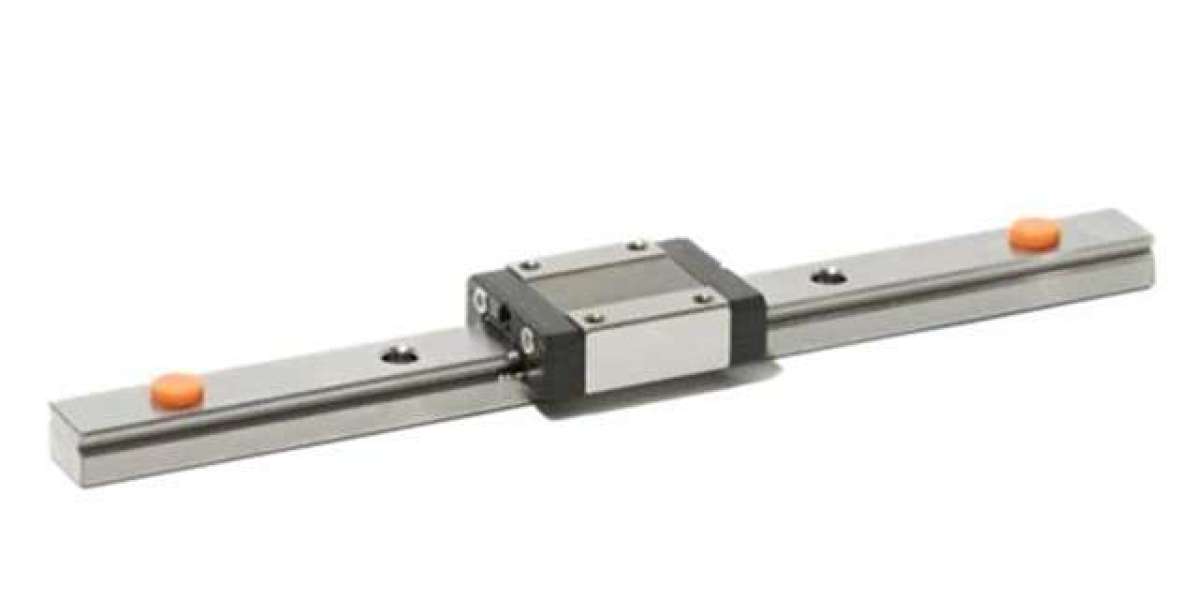
A Miniature Linear Guide is a type of linear guide designed for applications where space is constrained and high precision is required. It consists of a small rail, a carriage or slider, and rolling elements such as balls or rollers that facilitate linear motion with minimal friction. Despite their small size, miniature linear guides maintain high load capacity relative to their dimensions and deliver consistent, smooth movement.
Miniature linear guides are commonly made from materials such as stainless steel or hardened steel to ensure durability, wear resistance, and corrosion protection. Their compact design makes them ideal for applications where conventional linear guides would be too bulky or impractical.
Key Advantages of Miniature Linear Guides in Robotics and Automation
The popularity of miniature linear guides in robotics and automation stems from their combination of precision, durability, and space efficiency. Here are the primary advantages:
High Precision – Miniature linear guides enable extremely accurate linear motion, which is critical in robotic arms, sensors, and automation systems where even minor deviations can affect performance.
Smooth Motion with Low Friction – Rolling elements reduce friction, ensuring smooth, stable movement and reducing wear on the system.
Compact Design – Their small size allows installation in tight or restricted spaces, making them ideal for miniaturized robots and automation machinery.
Versatile Load Handling – Miniature guides can handle moderate loads in various directions, including vertical, horizontal, and moment loads.
Durability – High-quality materials and precise manufacturing provide longevity and resistance to environmental factors like dust, heat, and vibration.
Types of Miniature Linear Guides
Miniature linear guides come in several types, each suited to different applications within robotics and automation:
1. Miniature Ball Type Linear Guides
Description:
These guides use tiny balls as rolling elements within the carriage, allowing smooth motion along the rail.
Applications:
High-precision robotic arms
Pick-and-place automation
Laboratory automation equipment
Advantages:
Ball type miniature guides are perfect for applications requiring high speed, low friction, and excellent positioning accuracy.
2. Miniature Roller Type Linear Guides
Description:
Instead of balls, cylindrical rollers are used, which increases the contact area between the carriage and rail, enhancing load-bearing capacity.
Applications:
Miniature industrial robots handling heavier payloads
Micro-manufacturing systems
Compact assembly machines
Advantages:
Roller type miniature guides are ideal when higher rigidity and load capacity are needed in a small form factor.
3. Miniature Profile (Square) Rails
Description:
These guides have a square cross-section, providing high stability and resistance to tilting or rotational forces.
Applications:
Surgical robots
Precision inspection systems
Compact 3D printers
Advantages:
Profile rails in miniature sizes combine precision and structural rigidity, making them suitable for delicate and precise robotic tasks.
Applications in Robotics
Robotics relies heavily on accurate and smooth motion for operational efficiency. Miniature linear guides contribute to this in several ways:
1. Robotic Arms and Manipulators
In compact robotic arms, especially those used in assembly or laboratory automation, miniature linear guides allow precise linear movement of joints and end-effectors. This ensures that tasks like picking, placing, or assembling small components are executed with high repeatability.
2. Medical and Surgical Robotics
Miniature linear guides are essential in surgical robots, where extreme precision is mandatory. They provide smooth, controlled motion for robotic instruments in minimally invasive procedures, enhancing patient safety and surgical outcomes.
3. Micro-Robotics
Miniature linear guides are crucial in micro-robotic applications, including inspection and maintenance robots for electronics and small-scale machinery. They allow precise motion in tight, confined spaces where traditional linear guides cannot fit.
4. Humanoid Robots
In humanoid robots, these guides are used in finger joints, wrist movements, and small actuators, providing natural, smooth, and precise motion necessary for dexterous manipulation.
Applications in Automation
Automation systems also benefit significantly from miniature linear guides due to their precision, compactness, and smooth operation:
1. Pick-and-Place Machines
Pick-and-place machines, widely used in electronics assembly, rely on miniature linear guides to move components quickly and accurately from one location to another. The guides enable high-speed, low-friction motion, which improves productivity and reduces errors.
2. Laboratory Automation
Automated laboratory equipment, such as liquid handlers and diagnostic machines, use miniature linear guides for precise positioning of samples, pipettes, or sensors. This improves reliability and repeatability in experiments or medical testing.
3. Packaging Automation
In automated packaging systems, miniature linear guides facilitate precise movement of small products and packaging materials, ensuring consistent alignment and reducing waste.
4. Semiconductor Manufacturing
Semiconductor equipment requires extremely precise motion in compact assemblies. Miniature linear guides ensure smooth transport of wafers, sensors, and robotic tools within highly constrained spaces.
Choosing the Right Miniature Linear Guide
Selecting the appropriate miniature linear guide for a specific robotic or automation application involves evaluating several factors:
Load Requirements – Determine the maximum weight the guide must support, including dynamic loads during motion.
Space Constraints – Miniature guides are ideal for tight spaces, but the exact size must match the installation area.
Precision Needs – High-accuracy applications may require ball or profile miniature guides, whereas moderate precision may suffice with roller types.
Speed of Operation – Low-friction ball guides excel at high-speed movement, whereas roller guides may be better for heavier loads at moderate speeds.
Environmental Considerations – Consider exposure to dust, liquids, or temperature fluctuations and select corrosion-resistant materials if needed.
Future Trends in Miniature Linear Guides for Robotics and Automation
The demand for miniature linear guides is expected to grow as robotics and automation become more compact, precise, and integrated into everyday applications. Some emerging trends include:
Integration with Smart Sensors – Combining miniature linear guides with sensors for real-time position feedback and condition monitoring.
Advanced Materials – Use of lightweight, corrosion-resistant, and self-lubricating materials for improved performance and maintenance-free operation.
Miniaturization in Medical Robotics – Development of even smaller guides for micro-surgical robots and nano-manipulation systems.
High-Speed, High-Precision Automation – Enhancements in guide design for faster, more accurate automated assembly lines in electronics and semiconductor industries.
Conclusion
Miniature Linear Guides are transforming the landscape of robotics and automation by providing precise, compact, and smooth linear motion in applications where traditional guides cannot fit. Their versatility and high performance make them indispensable in industries ranging from medical robotics and micro-automation to pick-and-place systems and semiconductor manufacturing.
As technological demands for miniaturization, precision, and automation continue to grow, miniature linear guides will play an increasingly crucial role in enabling efficient, reliable, and high-performance robotic and automation systems. Investing in the right miniature linear guide is not just a choice for today’s machinery—it’s an investment in the future of precise, efficient, and innovative automation.