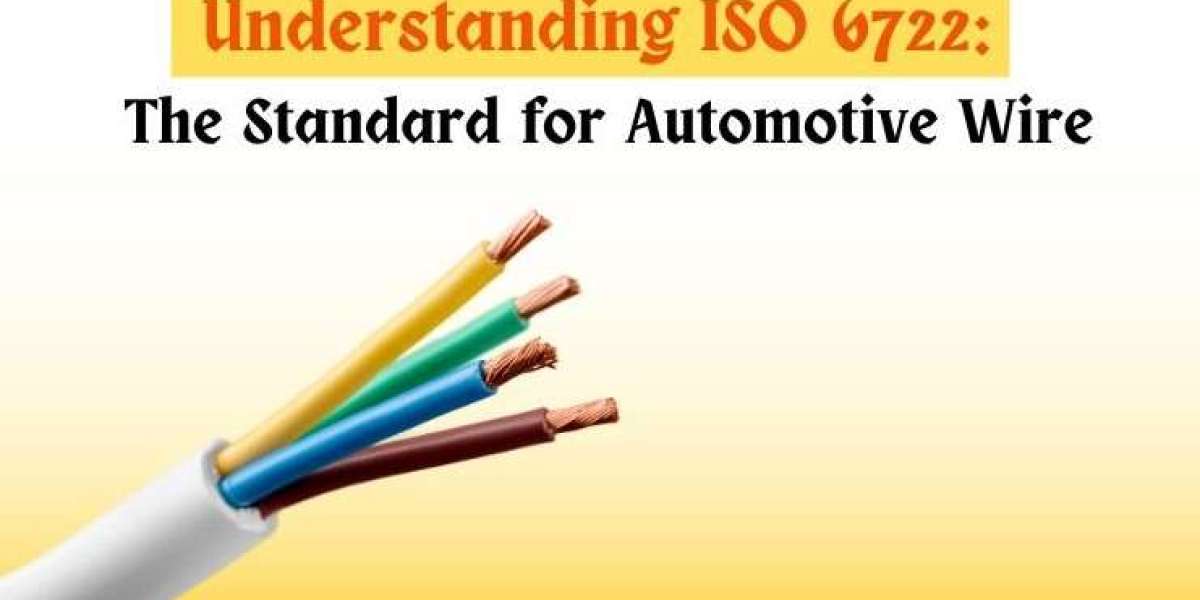

ISO vs Non‑ISO Automotive Wires: Key Differences You Should Know
When working with automotive electrical systems, whether you’re building a new vehicle, re‑wiring an older one, or just doing a repair, one key decision is the type of wiring you use. Especially relevant is whether the wiring adheres to a recognised standard. In this article, we focus on the term “ISO Standard Automotive Wire” and compare ISO‑standard automotive wire versus non‑ISO automotive wires — looking at key differences, why they matter, and how this affects safety, reliability, and performance.
What is an “ISO Standard Automotive Wire”?
Before we talk differences, it’s helpful to clarify what we mean by “ISO standard automotive wire”.
In automotive wiring, “ISO” often refers to wiring (or cables) that conform to one of the international standards published by the International Organization for Standardization (ISO). For example, ISO 6722 is a key standard for single‑core vehicle wiring (60 V and 600 V, copper) for road vehicles.
When we say ISO Standard Automotive Wire, we mean wiring that meets the requirements of such ISO standard(s) in terms of conductor construction, insulation materials, temperature rating, mechanical and electrical properties, testing, and proper marking/traceability.
By contrast, “non‐ISO” automotive wires are those that may not follow an ISO automotive wiring standard (or not certified to it) — they might be made to lesser or different specifications, maybe just “automotive grade” in a general sense, but without a formal standard guarantee.
Here are a few key ISO standards relevant to automotive wiring:
ISO 6722 – Road vehicles – 60 V and 600 V single‑core cables (copper) for road vehicles.
ISO 19642 – Road vehicles – Automotive cables – multi or single core, aluminium conductor.
So when you see wiring labelled “ISO 6722 compliant” or “to ISO standard”, it means it meets specified requirements of that standard.
Why Using ISO‑Compliant Wiring Matters
There are several reasons why opting for ISO standard automotive wires is beneficial:
Consistent quality and specification
Standards like ISO 6722 define conductor type, insulation material, temperature rating, electrical resistance, mechanical strength, test methods, etc. This means you get predictability in performance.Safety and durability
Automotive environments are harsh: vibration, temperature swings, exposure to oils, fuels, chemicals, tight spaces, potential abrasion, or routing near hot components. ISO standards take much of this into account. Non‑standard wires might skip some of those rigorous tests and may fail sooner.Traceability and certification
With ISO‑compliant wire, you often have test reports, markings, and documentation showing compliance. This helps in quality control, auditing, and warranty claims. Non‑standard wire may lack such documentation.Compatibility and system reliability
When manufacturers of vehicles or harnesses design to a known standard, they know what to expect from the wiring. If you deviate and use non‑standard wiring, you may introduce weak links (e.g., insulation that degrades, conductor resistance higher than expected, mechanical failure).Resale value, warranty, liability
Using wiring that meets recognized standards is better from a regulatory, warranty, and liability perspective. If wiring fails and is found to be non‑standard, this may affect liability or insurance.
Given these points, using ISO standard automotive wire is generally recommended for mission‑critical or long service life applications. However, non‑ISO wires are still used (especially in cost‑sensitive, non‑OEM or aftermarket contexts). So let’s explore how they differ in detail.
Key Differences Between ISO Standard Automotive Wire vs Non‑ISO Wire
Below is a breakdown of major areas of difference.
1. Specification & Materials
ISO‑compliant wires: These define exact conductor material (typically soft‑annealed stranded copper), insulation material (for ISO 6722, the conductor construction and insulation are specified). For example, some ISO 6722 wires use cross‑linked PE (XLPE) insulation rated up to 125 °C.
Non‑ISO wires: May use cheaper materials, less stringent insulation, less consistent conductor stranding, and may not declare full compliance. There may be variation in performance.
2. Temperature Rating, Voltage Rating & Environmental Resistance
ISO wires: Designed to handle automotive‑specific operating conditions. ISO 6722 wires can operate from ‑40 °C to +105 °C (and some up to +125 °C) and are rated for certain voltages and insulation must withstand oil/fuel/abrasion.
Non‑ISO wires: Might have lower rating, lack oil/abrasion/fuel resistance, or simply rely on generic “automotive use” label without rigorous specification.
3. Mechanical & Chemical Durability
ISO wires: Tested for abrasion resistance, exposure to engine oils or fuels, vibration, flexing, etc. XLPE‑insulated ISO 6722 wires are oil resistant, fuel resistant, abrasion resistant, and flame resistant.
Non‑ISO wires: May not have full durability data, or may skip rigorous testing, making them more prone to early failure.
4. Marking, Traceability & Certification
ISO wires: Marked with standard references, manufacturer, part number, date code, traceable batch. Compliance documentation may be available.
Non‑ISO wires: May lack proper markings or have vague labels like “Automotive wire.” Traceability may be weaker.
5. Cost vs Value
ISO wires: Often cost more upfront because of higher‑grade materials, stricter manufacturing, and testing processes.
Non‑ISO wires: Cheaper initially but may incur hidden costs through reduced reliability, earlier failure, or higher maintenance.
6. Application Context and Risk Profile
ISO wires: Ideal for critical systems: engine harnesses, high temperature zones, critical sensors, main power feeds, safety systems, EV/hybrid applications.
Non‑ISO wires: Might be acceptable for less demanding circuits like some aftermarket accessories or low‑current interior wiring. Risk is higher if used in demanding zones.
Practical Implications: What Should You Choose?
Assess the Application Zone
Where is the wire going? Under the hood, near the engine, exposed to heat or chemicals? If the wiring path runs through hot, compact zones, then ISO‑standard wiring is strongly recommended. For low-stress areas, non‑ISO might suffice.
Check Ratings & Manufacturer Specs
Even if wiring is labelled “automotive grade,” check the detailed specs: temperature range, voltage rating, insulation type, oil/fuel resistance, flame rating, conductor size and stranding, and applicable standard.
Consider Lifecycle & Safety
Automotive vehicles are in operation for many years. Failures in wiring can cause downtime, repairs, or safety hazards. Using ISO‑standard wiring gives a margin of safety and longevity.
Total Cost of Ownership
ISO wires cost more upfront but reduce failures, maintenance, and replacements over the vehicle’s lifecycle. Non‑ISO may appear cheaper but can be costlier in the long run.
Regulatory / Warranty / Vehicle Manufacturer Requirements
OEMs often specify ISO‑standard wiring. Deviating from these can invalidate warranties or fail quality audits.
Marking & Documentation
Ensure wires are properly marked and traceable. Keep documentation for verification and maintenance. Non‑ISO wires may lack this traceability.
A Few Concrete Examples
FLR2X‑B Automotive Wire: XLPE insulation to ISO 6722, rated continuous from ‑40 °C to +125 °C, oil resistant, fuel resistant, abrasion resistant, flame resistant. Clearly designed for tough automotive conditions.
Low‑cost aftermarket “Automotive wire” with unspecified standard might work for interior wiring but lacks oil/fuel resistance, high temp rating, or durability required under the hood.
ISO 6722 thin-wall insulation wires save weight and bundle diameter without sacrificing reliability.
When Non‑ISO Wires Might Be Acceptable (and When They’re Not)
Acceptable use cases
Interior low‑current accessory circuits that are easy to access, away from heat, oil/fuel, vibration.
Hobbyist or custom applications where cost dominates, and service life or safety criticality is lower.
Non‑critical aftermarket wiring for audio switches or interior lighting.
Cases to avoid using non‑ISO wires
High‑current feeds, starter/alternator circuits.
Under‑hood wiring near heat sources.
Safety-related circuits like airbags, engine management, braking systems.
EV/high-voltage wiring or wiring in harsh environments.
Vehicle manufacturer harnesses requiring compliance.
How to Identify ISO Standard Automotive Wire
Check for standard reference printed on insulation or packaging (e.g., “ISO 6722 Class B”).
Inspect temperature rating: ‑40 °C to +105 °C (or +125 °C).
Check insulation type: XLPE or specified thin-wall PVC.
Look for manufacturer marking, batch codes, certification documentation.
Verify physical characteristics: proper stranding, insulation thickness, conductor size, and suitability for automotive environment.
Confirm OEM or specification requirements for your vehicle.
Final Thoughts
The choice between ISO standard and non‑ISO automotive wires boils down to safety, reliability, and long-term performance:
ISO Standard Automotive Wire = high-quality, tested, certified, traceable, generally higher cost but lower risk and longer service life.
Non‑ISO Automotive Wire = may be cheaper and acceptable in low-stress applications but carries higher risk and less reliability.