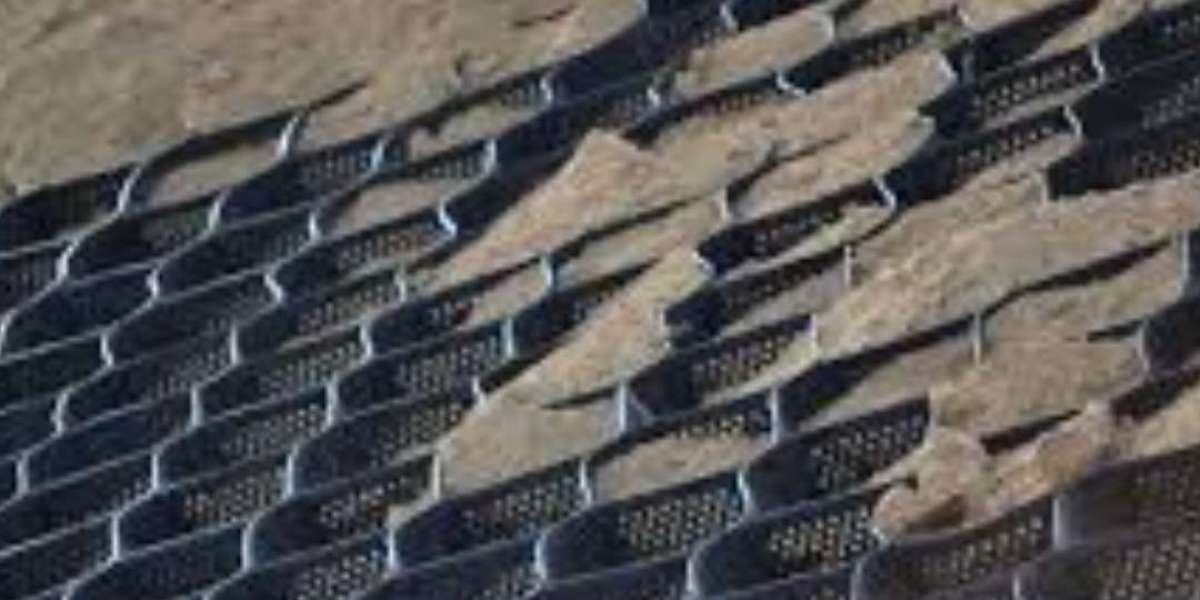

New materials and methods are continuously changing the way we build infrastructure, especially in difficult areas, in the fast-moving field of civil engineering. One such innovation is the use of geocell technology, which is a socially and environmentally friendly, and very efficient, multi-purpose solution. Geocell is a kind of a cellular confinement system that is made of high-density polymers, and which creates a structure resembling a honeycomb, and when it is filled with the nearest materials, such as gravel or soil, it stabilizes the earth and distributes the load very well. As a result of the use of geocell in road construction, the method of fixing the road has been changed to a great extent and it has become a very viable option, which does not pollute the environment as much and does not require the extraction of a lot of materials, which is usually the case in traditional methods. With the global call for infrastructure capable of resisting harsh weather, the comprehension of geocell's impact turns out to be a burning issue, engineers, and managers who will be able to produce solutions that are not only durable but also cheap and carbon-neutral.
Understanding Geocell Technology: The Foundation of Modern Soil Reinforcement
The essential principle of Geo cell technology is that it uses a series of cells, which are connected and made of high-density polyethylene (HDPE) or other similar polymers, to form a network. These cells are characterized by their ability to expand, their being pliable, and they are also intended to be easily transported as well as put into use in different types of terrains. After they have been spread and placed on the prepared ground, the cells are stuffed with locally sourced aggregate or soil that is subsequently compacted so as to obtain a solid and tight layer. By using this cellular confinement load distribution becomes significantly more efficient as the area over which the load is distributed increases and thus the load on the underlying weak soils is drastically reduced. The geocell also ensures the permeability of the system which allows water to drain and thus no hydrostatic pressure is formed which weakens foundations and causes surface failures. The combination of these properties namely strength, flexibility, and the possibility of drainage is the reason for which geocell technology is very often used for reinforcement of unstable soils, slopes, and erosion areas that are becoming more and more frequent and are posing a danger.
Applications and Benefits of Geocell in Modern Construction
The fact that geocell technology is capable of carrying out a broad range of functions does not overshadow the fact that its most significant application is in road construction using geocellsthose areas that have unfit native soils are the target of the heavy traffic that the roads suffer. The use of geocells under asphalt or concrete pavements results in an increased load-bearing capacity, less rutting, and a longer lifespan of the roadway. Besides, geocell systems are used in stabilization of the slope, protection of bank against erosion of the river, strengthening the embankment, and solidification of the foundation for bridges as well as buildings. The fact that they can be used in any terrain and weather conditions enables them to be quickly implemented, thus the project costs are reduced as well as the inconvenience caused. Besides this, the implementation of geocell technology makes the building industry more eco-friendly as it ensures minimal soil disturbance, reduces the demand for the already prepared fill materials, and allows the water to flow naturally- all of which are very important factors in eco-friendly construction practices.
Advantages of Utilizing Geocell Technology in Infrastructure Projects
One of the main advantages of using Geo cell technology in a construction project is the reinforcement of the soil. With this technology, it is possible to build on areas with a weak soil without the need to remove the bad soil or excavate the area. As a result, this method of construction is much cheaper and time-saving. The use of geocell restrains soil within it and thus keeps it from moving, the soil can also be spread evenly inside the cells which prevents erosion and surface deformation and consequently results in stability. Besides, geocell products facilitate water flow which prevents water pressure build-up and keeps the area dry. Additionally, the technology reduces the carbon footprint by lessening the volume of soil to be removed, the distance over which materials will be transported, and the water cycle disturbance in nature. The long life of structures that are strengthened by geocell means less money spent on upkeep over time and also a higher level of safety which makes it the most suitable solution for the development of sustainable infrastructures.
Best Practices for Implementing Geocell in Road and Soil Stabilization Projects
To efficiently implement geocell technology, detailed forethought and flawless operations are indispensable. Thorough site evaluation is the first stage in the process for which the condition of the soil, stability of the slope, drainage, and environmental factors should be examined. It is necessary that the area is well-prepared for the work to begin, and that includes not only the removal of the unneeded materials but also leveling and compacting the base to make it more stable. After that, geocell is unfolded and arranged in a way that secures one panel to the following with a clamp or some adhesive and ensures that they are fixed enough so they wont move while filling. Subsequently, the cells are packed with an appropriate material such as gravel or small stones and later compacted to the utmost degree to ensure stability and also load transfer are at the maximum levels. The top layer composed of either asphalt or concrete will cover the geocell surface thus the job will be completed. It is very important at the time of installation and after it, the site has to be checked to make sure that the gear being installed is working effectively and if there are any issues they can be addressed right away.
Economic Impact of Geocell-Enhanced Infrastructure
One of the ways that geocell works to save the environment is by mitigating the negative effects that come with the removal of native soils as well as cutting back on carbon emissions caused by the transportation of materials and the earthworks through the reinforcement of the natural soils with the geocell system and excavating less. Moreover, these systems are permeable and this allows for the natural water flow which in turn prevents erosion and waterlogging that are formidable threats to the environment. From an economic perspective, the installation of geocell systems is a smart investment as it is bound to result in less money being spent on the upkeep of the area in the future. In addition to that, shortened timelines for projects and lowered environmental footprints also represent social and economic advantages especially in secluded areas with a fragile ecosystem. In a nutshell, geocell adoption is in harmony with SDGs as it facilitates the development of infrastructures that are durable, eco-friendly, and enter the circular economy concept.
Conclusion
In brief, technology with geocell changed the way engineers solve problems of soil stabilization and road construction. The first one to come to their minds is to use geocell technology as it mitigates weak soils, improves load distribution, and it stands for environmental sustainability. The application of geocell systems in geocell road construction and other fields has been effective and hence, their great function and wide range of uses have been proven in creating durable, cost-efficient, and eco-friendly infrastructure. As the capacity of Geocell road construction expands due to the continuous research and progress in this field, these systems become one of the most important elements in the construction of resilient communities and climate adaptation strategies. Taking advantage of this revolutionary concept at present is a sure way of securing a safer, more sustainable, and economically viable future for infrastructure development all over the globe.
Frequently Asked Questions
What is geocell technology?
Geocell technology refers to the usage of high-density polymer cells expanded into a honeycomb structure, which is then filled with soil or aggregate to strengthen and stabilize weak soils.How does geocell improve road construction?
By improving load distribution, rutting prevention, and increasing the lifespan of roads constructed in difficult or unstable areas.What materials are commonly used to make geocells?
High-density polyethylene (HDPE) is the main material, and it is selected for its strength, flexibility, and durability.Can geocell systems be environmentally friendly?
Of course, particularly with the appearance of biodegradable alternatives, they assist in the natural water flow and lessen the disturbance of soil.What types of terrains are suitable for geocell applications?
Geocell works well on slopes, weak soils, areas susceptible to flooding, and uneven terrains in need of stabilization.Who is the largest supplier of Geocell?
Singhal Global PVT Ltd is one of the suppliers of Geocell, but it is not necessarily the largest globally. The largest supplier of Geocell can vary depending on the region and market demand.Who is the largest exporter of Geocell?
Singhal Global PVT Ltd may be a recognized exporter of Geocell, but it is not typically identified as the largest exporter worldwide.Who is the largest manufacturers of Geocell?
Singhal Global PVT Ltd is one of the manufacturers of Geocell, but it is not generally recognized as the largest manufacturer worldwide.Can geocell be combined with other geotechnical methods?
Sooner or later combined geocells with geogrids or geotextiles can provide multi-layer reinforcement for complex projects.What maintenance do geocell-reinforced structures require?
Almost no maintenance is required; periodic check-ups and repair of the damages keep them in good condition and performant.