
The Ultimate Guide to Cap Rates: Formulas, Examples, and Tools
Understanding capitalization rates—commonly known as cap rates—is essential for anyone involved in real estate investing. Whether you’re evaluating a potential rental property, comparing commercial buildings, or analyzing long-term portfolio performance, the cap rate provides a quick, reliable snapshot of expected return. In this comprehensive guide, we’ll break down exactly what cap rates are, how they’re calculated, how they differ by market, and how to use a Cap Rate Calculator to streamline your analysis.
This guide is written in a human, natural style and covers everything you need to make smart, data-driven investment decisions.
What Is a Cap Rate?
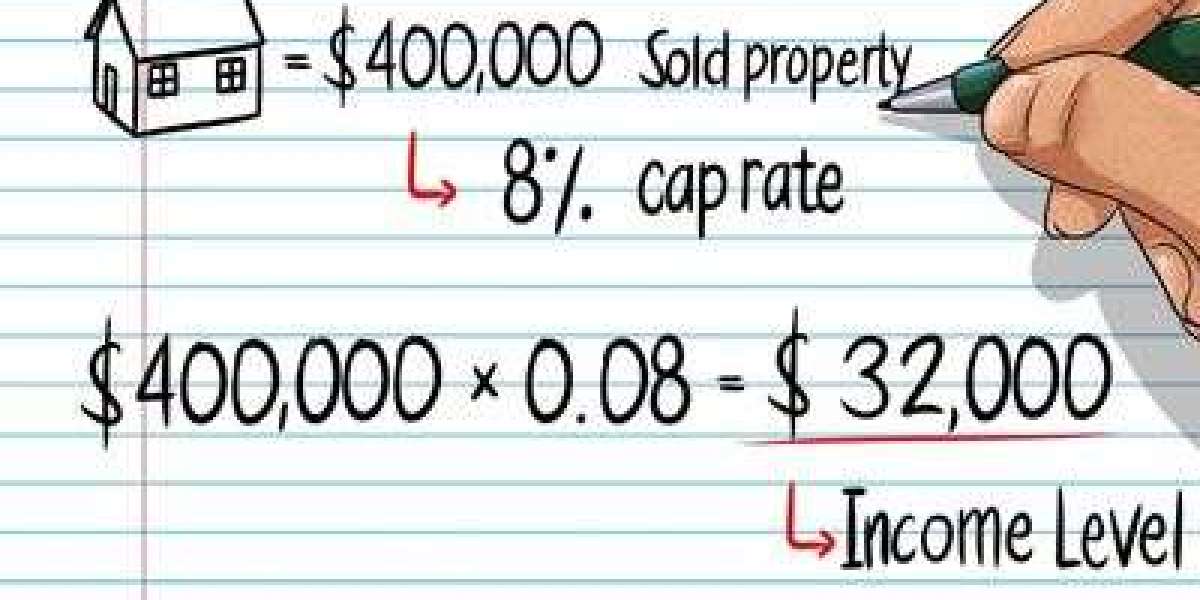
A capitalization rate, or cap rate, measures the relationship between a property’s net operating income (NOI) and its purchase price or market value. Investors use the cap rate to estimate the rate of return they can expect if they were to buy the property with cash.
Unlike cash-on-cash return, the cap rate does not factor in financing costs. This makes it an excellent metric for comparing properties on equal footing, regardless of mortgage terms.
Why Cap Rates Matter
Cap rates help investors:
Compare properties across markets and asset types
Estimate potential return on a cash purchase
Quickly identify overvalued or undervalued opportunities
Assess market risk based on location trends
Forecast income stability
When used correctly—often with a reliable Cap Rate Calculator—cap rates become a powerful first-step tool in any acquisition analysis.
The Cap Rate Formula
The cap rate is calculated using a simple formula:
Cap Rate = Net Operating Income (NOI) ÷ Property Value
Where:
NOI = Gross rental income – operating expenses
Operating expenses include maintenance, management, taxes, insurance, utilities (if paid by owner), and vacancy allowance
Property value = purchase price or current market value
Example of a Cap Rate Calculation
Imagine you’re looking at a small apartment building that generates:
Gross rental income: $120,000 per year
Operating expenses: $45,000 per year
NOI: $75,000
Purchase price: $1,000,000
Now apply the formula:
Cap Rate = $75,000 ÷ $1,000,000 = 0.075 or 7.5%
This means the property would yield a 7.5% annual return if purchased in cash.
A Cap Rate Calculator makes these inputs adjustable, so you can try multiple property valuations or income scenarios in seconds.
What Is a Good Cap Rate?
There is no universal good or bad cap rate. The best cap rate depends on:
Market location (urban vs. suburban vs. rural)
Property type (multifamily, retail, office, industrial)
Risk tolerance (higher risk often equals higher cap rate)
Demand and supply trends
Property condition and tenant stability
That said, here’s a general guideline:
Property Type | Typical Cap Rate Range |
Multifamily | 4–7% |
Retail Centers | 5–8% |
Industrial | 5–7% |
Office Buildings | 6–10% |
Mobile Home Parks | 7–12% |
Prime markets like San Francisco or New York often have lower cap rates, sometimes 3–4%, due to high demand and perceived stability. Meanwhile, emerging markets or secondary cities may offer 8–12% cap rates.
A Cap Rate Calculator helps compare these properties side by side.
Cap Rate vs. ROI: Understanding the Difference
Cap rate and return on investment (ROI) are related but not interchangeable.
Cap Rate:
Measures income relative to property value
Assumes a cash purchase
Does not include mortgage payments
Helps with quick comparisons
ROI:
Calculated using total investment and total return
Includes financing, tax benefits, equity growth
More comprehensive but less useful for quick property screening
When evaluating properties, most investors begin with cap rate for speed and consistency, then calculate full ROI later.
Cap Rate and Risk: How They Relate
A fundamental rule in real estate:
Higher cap rates usually indicate higher risk. Lower cap rates usually indicate lower risk.
High Cap Rate Properties (8%+)
Often located in developing or high-turnover areas
Potential for greater cash flow
May have older buildings or unstable tenants
Require more active management
Low Cap Rate Properties (3–5%)
Located in prime, low-risk markets
Stable demand and high appreciation potential
Lower immediate cash returns
Often chosen for long-term wealth preservation
Using a Cap Rate Calculator, you can quickly evaluate whether the additional income from a high-cap-rate property outweighs the associated risks.
Cap Rate Examples by Property Type
1. Multifamily Property Example
Gross income: $200,000
Operating expenses: $70,000
NOI: $130,000
Value: $2,600,000
Cap Rate = 5%
This is typical for a stable multifamily building in a strong metro.
2. Retail Property Example
NOI: $300,000
Value: $4,000,000
Cap Rate = 7.5%
Higher due to tenant turnover risk and retail market changes.
3. Industrial Property Example
NOI: $90,000
Value: $1,350,000
Cap Rate = 6.7%
Industrial tends to offer strong income with moderate vacancy risk.
How to Project Future Cap Rates
Cap rates shift based on:
Interest rates
Market performance
Local job growth
Commercial development
Property condition
Investors often estimate future values using:
Future Property Value = NOI ÷ Market Cap Rate
Example:
NOI: $100,000
Market cap rate expected in 5 years: 6%
Value = $100,000 ÷ 0.06 = $1,666,667
A Cap Rate Calculator with forecasting capability helps model these scenarios.
Cap Rate Limitations
While cap rates are extremely useful, they are not perfect. Here’s what they don’t tell you:
Cash flow after accounting for financing
Maintenance surprises or capital expenditures
Income growth potential
Appreciation trends
Tax impacts
Local zoning or political risks
Cap rates are best used as a starting point, not the only decision-making metric.
When to Use a Cap Rate Calculator
A Cap Rate Calculator streamlines evaluation in situations such as:
Comparing multiple rental properties
Estimating return on an off-market deal
Analyzing before-and-after renovation scenarios
Updating cap rates using new income data
Creating investor presentations
Evaluating refinance opportunities
Instead of manually crunching numbers, a calculator enables quick, accurate comparisons that save investors time.
Cap Rate Scenarios Every Investor Should Know
1. The Increasing NOI Scenario
If operating income increases but value stays flat, cap rate rises.
Example:
NOI increases from $50,000 to $60,000 on a $1,000,000 property.
Cap rate moves from 5% → 6%.
2. The Rising Property Value Scenario
If property value increases but NOI stays the same, cap rate drops.
Example:
NOI stays at $80,000 but value rises from $1,000,000 to $1,200,000.
Cap rate moves from 8% → 6.7%.
3. The Investor Purchase Discount Scenario
If you buy below market value, your cap rate is higher than the area’s market cap rate.
This represents instant equity and improved return.
A Cap Rate Calculator makes these what-if scenarios effortless.
Cap Rates in Changing Market Conditions
When Interest Rates Rise
Cap rates usually increase
Property values often fall
Cash flows remain similar
When Interest Rates Fall
Cap rates typically compress (decrease)
Property values rise
Competition increases
Monitoring these trends helps determine the right time to buy or sell.
How to Use Cap Rates When Buying Rental Property
When evaluating a potential purchase:
Calculate an accurate NOI
Run the cap rate using a Cap Rate Calculator
Compare it to area averages
Analyze the risk profile
Factor in future rent growth
Check long-term market stability
By following these steps, you can make informed decisions backed by data rather than emotion.
How Cap Rates Influence Commercial Appraisals
Appraisers often use the Income Approach to determine commercial property value:
Value = NOI ÷ Market Cap Rate
If the market cap rate is 5% and the building earns $200,000 NOI:
Value = $200,000 ÷ 0.05 = $4,000,000
Small shifts in cap rate can dramatically change value, which is why understanding the metric is crucial.
Cap Rate Tools You Should Use
To evaluate properties efficiently, consider tools such as:
Cap Rate Calculator
NOI estimators
Expense analysis templates
Rent comparables spreadsheets
Market cap rate charts
Investment property dashboards
Using these tools together gives you a full picture of both risk and reward.
Conclusion: Mastering Cap Rates for Smarter Real Estate Investing
Cap rates are one of the most valuable metrics in real estate investing. They help you quickly assess potential returns, compare investments, predict market behavior, and negotiate better deals. When paired with a Cap Rate Calculator, the process becomes faster, more accurate, and much easier to replicate across multiple properties.