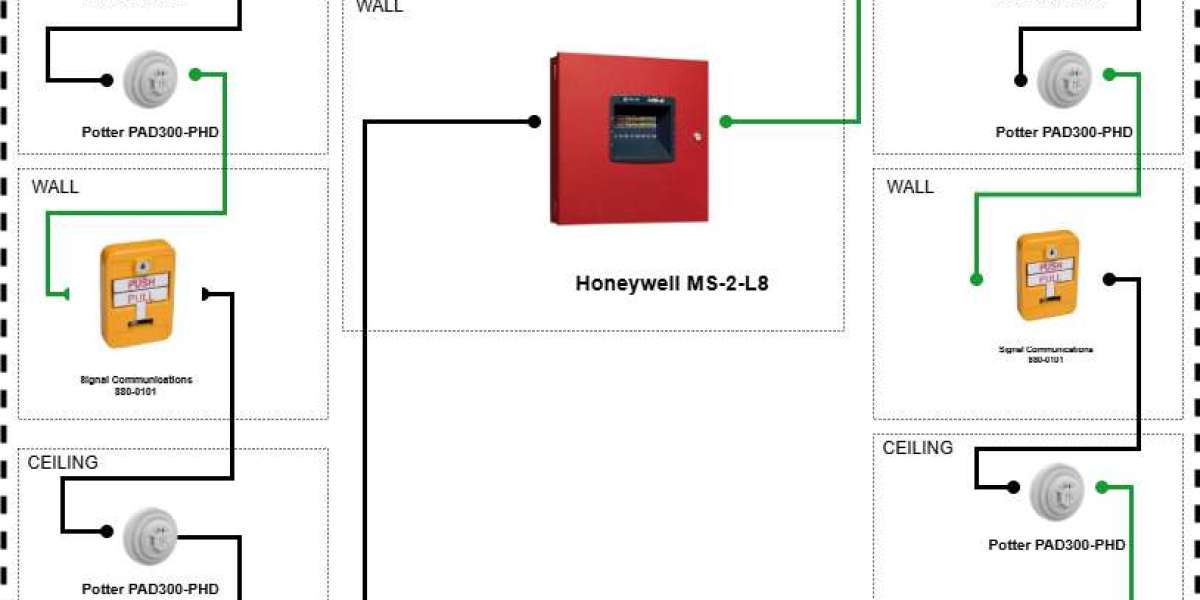

Fire alarm system design is no longer just about placing detectors and panels on a floor plan. Modern buildings demand intelligent, data-driven designs that ensure safety, efficiency, and compliance with codes. Premium Fire Alarm Design Software now integrates advanced analytics, allowing engineers to optimize device placement, monitor system performance, and predict potential issues before installation. These tools help designers create smarter fire alarm systems, reduce errors, and improve documentation quality. In this blog, we explore premium fire alarm design software that offers advanced analytics, highlighting their features, benefits, and how they can transform fire protection projects.
Why advanced analytics matter in fire alarm design
Advanced analytics in fire alarm design goes beyond simple layout creation. Analytics allow designers to:
Predict coverage and gaps: Ensure that all areas are adequately protected and no zones are left vulnerable.
Optimize device placement: Determine the best locations for detectors, notification appliances, and panels based on building layout, occupancy, and environmental conditions.
Analyze wiring and circuit loads: Evaluate electrical loads, loop capacities, and circuit redundancy to prevent system failures.
Ensure code compliance: Automatically check designs against NFPA, EN, or local standards, flagging any non-compliant placements or spacing.
Generate reports and dashboards: Summarize device counts, loop assignments, wiring lengths, and project statistics for better decision-making.
By integrating analytics directly into design software, engineers can make data-driven decisions, improving reliability and reducing costly rework during installation.
Features of premium fire alarm design software with analytics
Automated device placement
Premium tools use algorithms to suggest optimal detector and call point placement based on room dimensions, occupancy type, and ceiling height. This ensures uniform coverage and minimizes blind spots.Heat and smoke analysis
Advanced software can simulate heat and smoke propagation within a space. Designers can evaluate how quickly detectors respond under different scenarios, helping select the most effective device types.Loop and panel load calculations
Fire alarm analytics allow designers to calculate total loop load, check voltage drops, and ensure that control panels can handle the system configuration. This reduces the risk of wiring issues or device failures.Real-time compliance checking
As devices are placed, the software automatically flags spacing violations, improper zoning, or non-compliant circuit connections. Designers can adjust layouts instantly, reducing the need for manual verification.Data visualization dashboards
Premium software often includes dashboards that show device distribution, loop capacities, and system coverage. These visualizations make it easier to understand complex systems at a glance.Scenario simulations
Some tools allow designers to simulate fire scenarios, enabling evaluation of system response time and effectiveness. This helps in refining device placement and understanding system behavior under real conditions.
Top premium fire alarm design software with advanced analytics
1. XTEN-AV
XTEN-AV is a leading Fire Alarm Design Software that combines powerful layout tools with advanced analytics. It allows designers to import floor plans, automatically place devices based on code requirements, and analyze coverage areas. The software can simulate detector response, calculate loop capacities, and provide real-time compliance checks. XTEN-AV also generates detailed reports including device schedules, risers, and wiring documentation, helping engineers make informed decisions. Its cloud-based platform supports collaboration across teams, ensuring that analytics-driven designs are accessible to all stakeholders.
2. FireCAD by Cadgen
FireCAD is a premium CAD-based fire alarm design software that integrates advanced analytics into its platform. It offers automatic device placement, circuit calculations, and real-time compliance verification. FireCAD can produce reports summarizing device counts, loop loads, and wiring lengths, making it easier for engineers to optimize system designs. Its ability to export DXF and DWG files ensures compatibility with other CAD tools.
3. Arcus AI
Arcus is a cloud-based fire alarm design platform that leverages AI and analytics to generate optimized layouts. The software provides predictive coverage analysis, spacing verification, and loop optimization. Arcus also allows scenario simulations to test detector effectiveness and system response. Analytics dashboards help designers understand system load, identify potential bottlenecks, and make data-driven design decisions.
4. Endra AI Design Suite
Endra uses artificial intelligence combined with advanced analytics to create high-performance fire alarm systems. The platform evaluates floor plans, occupancy types, and environmental conditions to suggest optimal device placement. It also calculates loop loads, predicts coverage gaps, and provides risk assessments for different fire scenarios. Endra automatically generates documentation, making it ideal for large-scale commercial or industrial projects.
Benefits of using analytics-driven fire alarm design software
Improved accuracy
Analytics tools reduce errors in device placement, spacing, and circuit calculations, ensuring safer and more reliable systems.Time efficiency
Automated placement, load calculations, and compliance checks save hours of manual work. Projects can be completed faster without compromising quality.Cost savings
Optimized layouts and loop designs reduce material use and installation time, lowering overall project costs.Better collaboration
Cloud-based analytics platforms allow multiple users to work on the same project in real time, improving coordination between designers, engineers, and contractors.Future-proof documentation
Analytics-driven software generates detailed as-built drawings, device schedules, and system reports, making future maintenance and upgrades easier.
Best practices for using advanced analytics in fire alarm design
Define design parameters clearly
Set room dimensions, occupancy types, and ceiling heights accurately to ensure the software generates precise analytics.Use AI suggestions as a guide
While analytics provide optimized layouts, review AI suggestions to ensure they fit unique building requirements and practical installation considerations.Regularly update code libraries
Ensure the software has up-to-date fire safety standards and codes so that compliance checks remain accurate.Simulate different scenarios
Run multiple simulations to evaluate system performance under different fire conditions and identify potential improvements.Integrate with BIM and CAD workflows
Export analytics-driven layouts to DXF, DWG, or BIM formats to coordinate with other building systems and stakeholders.
Conclusion
Premium fire alarm design software with advanced analytics is transforming how engineers approach system planning. Tools like XTEN-AV, FireCAD, Arcus, and Endra allow designers to automate device placement, calculate loop loads, verify compliance, and simulate fire scenarios. By integrating analytics into Fire Alarm Design Software, engineers can create safer, more efficient, and cost-effective systems. Analytics-driven design not only improves accuracy and reduces errors but also streamlines collaboration and enhances documentation quality. For professionals looking to stay ahead in fire protection design, adopting premium software with advanced analytics is an essential step toward smarter, data-driven fire alarm systems.