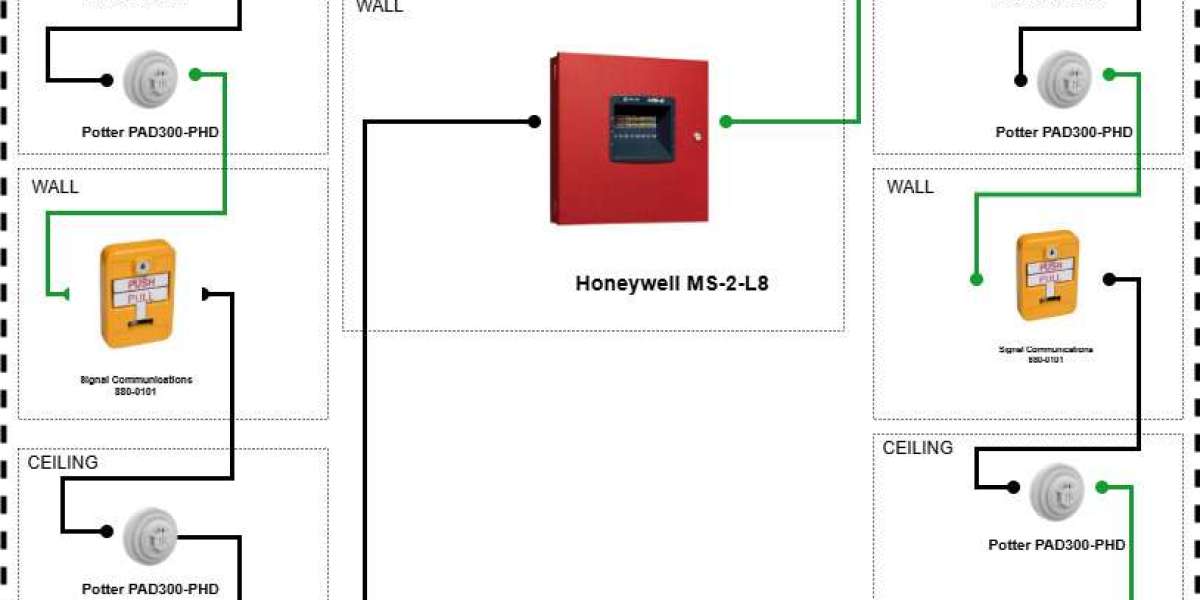

Ensuring safe and efficient evacuation during a fire incident is a top priority for building owners, facility managers, and fire protection engineers. Modern projects, especially high rise buildings, airports, hospitals, and industrial facilities, require advanced planning to prevent chaos during emergencies. Traditional methods, such as manual calculations or simple exit diagrams, are no longer sufficient for complex structures. At the forefront of this technological evolution is XTEN AV, providing platforms that integrate simulation capabilities with design workflows. Using Fire System Design Software, engineers can model occupant movement, evaluate evacuation scenarios, and optimize building layouts to improve safety. In this blog, we explore how fire tools simulate evacuation flow, the benefits of such simulations, and best practices for incorporating them into fire safety design.
Introduction
During an emergency, people do not always behave predictably. Panic, congestion at exits, bottlenecks in corridors, and impaired mobility can compromise safety. Understanding these factors is critical for designing fire protection systems and emergency evacuation plans.
Fire System Design Software now includes advanced evacuation simulation modules that allow engineers to predict occupant behavior under a variety of conditions. This is particularly valuable in large or complex structures where traditional methods may underestimate evacuation times or fail to identify potential hazards. XTEN AV’s integrated platform helps teams simulate real life scenarios, test multiple layouts, and generate actionable data to improve building safety.
Why evacuation simulations are important
Simulating evacuation flow and occupant movement provides several key advantages:
1. Accurate estimation of egress times
Traditional calculations may overlook congestion points. Simulation predicts realistic exit times for all occupants, including those with limited mobility.
2. Identifying bottlenecks and hazards
Simulations highlight areas where people may get trapped, allowing designers to adjust corridor widths, stair placement, and exit locations.
3. Supporting fire safety planning
Understanding occupant flow helps engineers determine optimal placement of fire alarms, sprinklers, emergency lighting, and signage.
4. Improving compliance with codes and standards
Building codes such as NFPA 101 or local fire regulations often require verification of evacuation times. Simulation provides data to demonstrate compliance.
5. Enhancing emergency response strategies
Simulated scenarios help facility managers develop better emergency procedures and guide first responders during planning.
How fire tools simulate evacuation flow
Fire System Design Software simulates evacuation flow using a combination of modeling, occupant behavior analysis, and real time algorithms. Here is how the process typically works:
1. Creating a detailed digital model of the building
The first step is to create a comprehensive digital layout of the structure. This includes:
Corridors, doors, and stairwells
Rooms, open spaces, and lobbies
Occupancy density and types of occupants
Fire detection and alarm systems
XTEN AV and similar platforms allow engineers to import architectural drawings, integrate BIM data, and define building geometry accurately. A precise model is critical for meaningful evacuation simulations.
2. Defining occupant characteristics
Not all occupants move at the same speed or have the same capabilities. Fire design tools allow users to define parameters such as:
Walking speed and mobility
Reaction time to alarms
Crowd density and behavior patterns
Groups requiring assistance, such as children, elderly, or people with disabilities
By incorporating these variables, simulations generate realistic predictions of occupant movement during emergencies.
3. Simulating fire and smoke conditions
Evacuation simulations are closely linked to fire dynamics. Fire System Design Software models how smoke, heat, and toxic gases spread throughout the building. Factors considered include:
Smoke propagation rates
Visibility reduction
Temperature increases
Activation of fire suppression systems
These conditions affect occupant behavior, such as speed of movement or avoidance of blocked pathways. The simulation adjusts flow patterns accordingly.
4. Real time flow analysis
Once building layout and occupant characteristics are defined, the software runs simulations to calculate movement over time. Advanced platforms like XTEN AV can track:
Density of occupants in corridors and stairwells
Queue formation at exits
Impact of obstacles and door widths
Interaction between different occupant groups
The simulation produces visual maps, heat maps, and flow diagrams that show where congestion is likely to occur.
5. Testing multiple scenarios
One of the biggest advantages of digital simulations is the ability to test various fire scenarios. Engineers can model:
Fires in different locations
Partial building occupancy versus full occupancy
Blocked exits or malfunctioning alarms
Simultaneous activation of sprinklers or suppression systems
By testing multiple scenarios, designers can identify weaknesses in the evacuation plan and optimize building layouts or emergency procedures.
6. Integrating evacuation data with fire protection design
Simulation results can inform broader fire protection design. For example:
Sprinkler and detector placement can be optimized based on evacuation speed
Emergency lighting and signage can be positioned to improve flow
Fire doors and smoke curtains can be adjusted to prevent smoke spread
Integrating evacuation modeling with Fire System Design Software ensures that life safety measures are fully coordinated with suppression systems.
Benefits of using evacuation simulation in fire safety planning
The use of fire tools to simulate occupant movement provides several tangible benefits:
Enhanced safety
Simulations reduce risk by predicting real life evacuation challenges.
Evidence for approvals and certifications
Authorities having jurisdiction often require documentation of evacuation performance.
Better design decision making
Visual flow analysis allows engineers to optimize layouts before construction.
Cost efficiency
Identifying design flaws early reduces expensive modifications after construction.
Improved emergency preparedness
Facility managers gain actionable insights for training drills and response plans.
Best practices for effective evacuation simulations
To maximize the benefits of simulation, engineers should consider these best practices:
1. Use accurate building data
Ensure the digital model reflects the real structure including obstacles, furniture, and room occupancy.
2. Include realistic occupant behaviors
Consider mobility limitations, panic tendencies, and group behaviors for accuracy.
3. Test multiple fire scenarios
Evaluate evacuation under a range of conditions including partial system failures or fires in different locations.
4. Integrate results with fire protection design
Use simulation insights to optimize sprinklers, alarms, and emergency routes.
5. Conduct periodic reviews
Buildings evolve over time. Update simulations whenever layouts change or occupancy patterns shift.
Conclusion
Evacuation flow and occupant movement are critical components of fire safety planning. Traditional methods cannot fully capture the complexities of real life emergencies, but advanced fire design tools have changed the landscape. Platforms like XTEN AV, using Fire System Design Software, allow engineers to simulate scenarios, analyze occupant behavior, and optimize both building layout and fire protection systems. By leveraging these capabilities, facility managers, architects, and engineers can design safer buildings, reduce evacuation risks, and ensure that occupants can exit efficiently even during complex emergency situations. As the demands of modern infrastructure grow, digital simulation is no longer optional—it is an essential part of comprehensive fire safety planning.
Read more: https://aphelonline.com/how-to-use-fire-system-tools-to-reduce-water-usage-in-eco-friendly-projects/