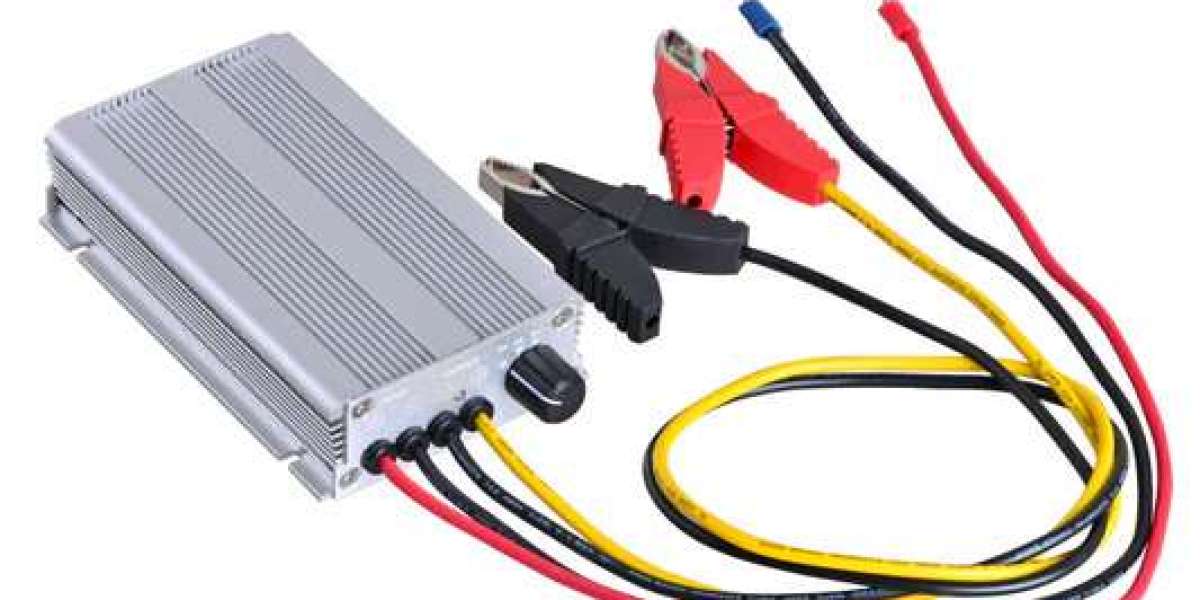

In modern power-electronics systems, the demand for high-voltage DC architectures has grown at a pace few could have predicted. As electric vehicles, industrial automation, telecom infrastructure, and renewable-energy systems expand globally, engineers increasingly rely on efficient voltage-conversion hardware to stabilize power distribution. Among these critical components, the 400V to 48V step-down converter has become indispensable due to its ability to safely transform high-voltage DC inputs into stable, low-voltage output for communication circuits, auxiliary loads, battery systems, and sensitive electronics.
But choosing the right converter is not as simple as picking a wattage and installing it. Power stability, safety features, topology, thermal performance, efficiency, and environmental demands all play a crucial role in ensuring long-term reliability. This is where a high-quality converter such as a
400V to 48V DC-DC Converter↗
becomes essential for engineers and businesses who cannot afford downtime, instability, or premature equipment failure.
This guide explains everything you need to know before choosing one, why these converters matter, how modern designs differ, and what features truly indicate long-term durability and performance.
Why Converting 400V to 48V Is So Common in Modern Systems
As power demands rise, many infrastructure systems have transitioned to 400V DC lines. This voltage level is considered a global standard in:
Electric vehicles
Solar power generation
Energy storage systems
High-performance data centers
Industrial automation and robotics
Hyperscale telecom centers
But why convert to 48V?
Because 48V DC strikes the perfect balance between efficiency, safety, and compatibility.
Why 48V Output Is Needed
Safe for low-voltage operations
Lower current compared to 12V/24V
Reduced heat loss
Widely adopted in telecom and battery systems
Efficient distribution over short distances
Ideal for auxiliary and communication circuits
A stable 48V output ensures seamless operation for controllers, fans, PLC systems, sensors, security devices, cooling modules, and onboard electronics.
How a 400V to 48V DC Converter Works (Simplified)
Although compact, these converters contain advanced electronics:
1. High-Voltage Input Filtering
Smooths electrical noise and protects internal circuitry.
2. High-Frequency Switching
MOSFETs or SiC/GaN transistors chop the input voltage at thousands of cycles per second.
3. Isolation Transformer (if isolated)
Provides galvanic isolation — essential for high-voltage safety.
4. Rectification and Smoothing
Converts high-frequency AC pulses back into stable DC.
5. Output Regulation
Intelligent control chips ensure consistent 48V output.
6. Protection Circuits
Shut down the system during faults before damage occurs.
Understanding this process helps buyers identify which features matter most.
Key Factors to Consider Before Buying a Converter
Below are the factors that truly determine reliability, safety, and durability.
1. Input Voltage Range Matters More Than You Think
Although labeled as “400V,” real-world systems rarely stay at exactly that value.
Solar arrays fluctuate
Batteries discharge
EV systems spike under load
Industrial machinery causes noise
A good converter supports wide input ranges such as:
300V–450V
350V–420V
380V ± 20%
This ensures uninterrupted functioning despite real-world voltage variations.
2. Output Voltage Stability Is Critical
A converter that outputs unstable voltage puts your entire system at risk.
Look for:
±1% or ±2% regulation
Low ripple
Dynamic load compensation
Temperature-compensated control
Even minor voltage ripples can cause premature wear on motors, sensors, and control chips.
3. Correct Power Rating (Wattage) Selection
Many installers choose a converter that matches their load exactly — a major mistake.
Use this rule:
Your converter should be 25–30% higher than your maximum expected load.
If your load is 800W, choose at least 1000W.
Why?
Start-up surges
Ambient temperature changes
Component aging
Peak-load events
Oversizing prevents overheating and extends lifespan.
4. Efficiency Rating (Higher = Better)
Efficiency matters because inefficient converters waste power as heat.
Heat shortens lifespan, increases cooling costs, and destabilizes voltage.
Recommended:
90% = good
94–96% = excellent
Top-tier converters use:
Silicon Carbide (SiC) technology
Gallium Nitride (GaN) switches
Soft-switching LLC resonant topologies
These reduce switching losses significantly.
5. Cooling & Thermal Management
Heat is the #1 cause of DC-DC converter failures.
Cooling types:
Passive cooling: quiet, long-lasting, but power-limited
Active cooling: fans keep temperatures low for high-power systems
Liquid cooling: used in EVs and heavy industrial equipment
Important thermal features:
Temperature sensors
Automatic derating
Over-temperature shutdown
Aluminum or copper heatsinks
6. Safety Protections You Should Never Compromise On
A high-quality converter must include:
Essential Protections
✔ Over-voltage protection (OVP)
✔ Over-current protection (OCP)
✔ Short-circuit protection (SCP)
✔ Over-temperature protection (OTP)
✔ Under-voltage lockout (UVLO)
✔ Reverse-polarity protection
These protect both the converter and the connected devices.
7. Isolation vs Non-Isolation: Which Do You Need?
Choose isolated converters if:
Working above 100V
Safety compliance is required
Industrial systems require noise reduction
Different ground potentials exist
Non-isolated converters are acceptable for:
Low-voltage systems
Compact installations
Cost-sensitive applications
For a 400V input, isolated converters are strongly recommended for safety.
Where 400V to 48V Converters Are Commonly Used
Understanding applications helps you choose correct specifications.
1. Electric Vehicles (EVs)
EVs use 300–400V battery packs.
But onboard electronics require 48V or lower.
Converters here power:
Fans
BMS systems
Lighting
Infotainment systems
Actuators
2. Solar Power Plants & Off-Grid Systems
Solar arrays often exceed 400V during peak sunlight.
Converters provide stable 48V to:
Charge controllers
Battery modules
Communication equipment
Monitoring systems
3. Industrial Automation
Factories rely on:
Sensors
PLCs
Robotics
Control panels
All requiring stable 48V for reliable performance.
4. Telecom & Data Centers
48V DC is the global standard for telecom infrastructure.
Converters help reduce power loss and increase energy efficiency.
5. Railways & Heavy Transport
These require vibration-resistant, rugged, shock-proof converters.
Modern Engineering Advancements in 2025
Today’s converters are far more advanced than those from 5 years ago.
Key innovations include:
✔ SiC/GaN semiconductor technology
✔ Lower EMI emissions
✔ Ultra-wide input ranges
✔ Digital control processors
✔ CANbus/RS485 communication support
✔ High-power density compact designs
✔ Smart thermal throttling
These features boost efficiency, reduce heat, and increase reliability.
Common Mistakes to Avoid When Buying a Converter
Here are errors that frequently cause premature failure:
❌ Choosing the cheapest option
Low-cost units often lack protection circuitry.
❌ Incorrect wattage selection
Undersizing causes overheating.
❌ Ignoring operating temperature
Hot environments destroy weak converters.
❌ Overlooking isolation
Dangerous when working with high voltage.
❌ Improper installation
Poor ventilation reduces lifespan dramatically.
Installation Tips for Maximum Safety and Longevity
✔ 1. Ensure proper airflow
Avoid enclosing the converter in airtight spaces.
✔ 2. Use correct fuses and breakers
High-voltage DC requires proper protection.
✔ 3. Check all screw terminals
Loose connections cause arcing.
✔ 4. Verify polarity
Reversed polarity can be catastrophic.
✔ 5. Regular maintenance
Clean dust, check fans, and monitor heat levels.
Is a 400V to 48V DC-DC Converter Safe?
Absolutely — if it contains correct safety barriers and isolation.
Industrial-grade converters use:
Reinforced isolation transformers
EMI filters
Smart protection circuits
Heat-resistant components
This allows them to operate safely even in demanding environments.
The Future of High-Voltage DC Conversion
By 2030, expect:
Even higher efficiencies (98%+ goals)
Smaller, denser modules
AI-based temperature control
Real-time cloud monitoring
Integration into smart grids
Universal wide-voltage systems
The future of power electronics continues moving toward higher voltage and smarter control.
Final Thoughts
Choosing the right converter is not just about stepping down voltage — it’s about ensuring long-term safety, performance, and system stability. Whether you're managing an EV platform, a solar installation, or an industrial automation setup, selecting a high-quality converter ensures smooth operation and protects your investment.