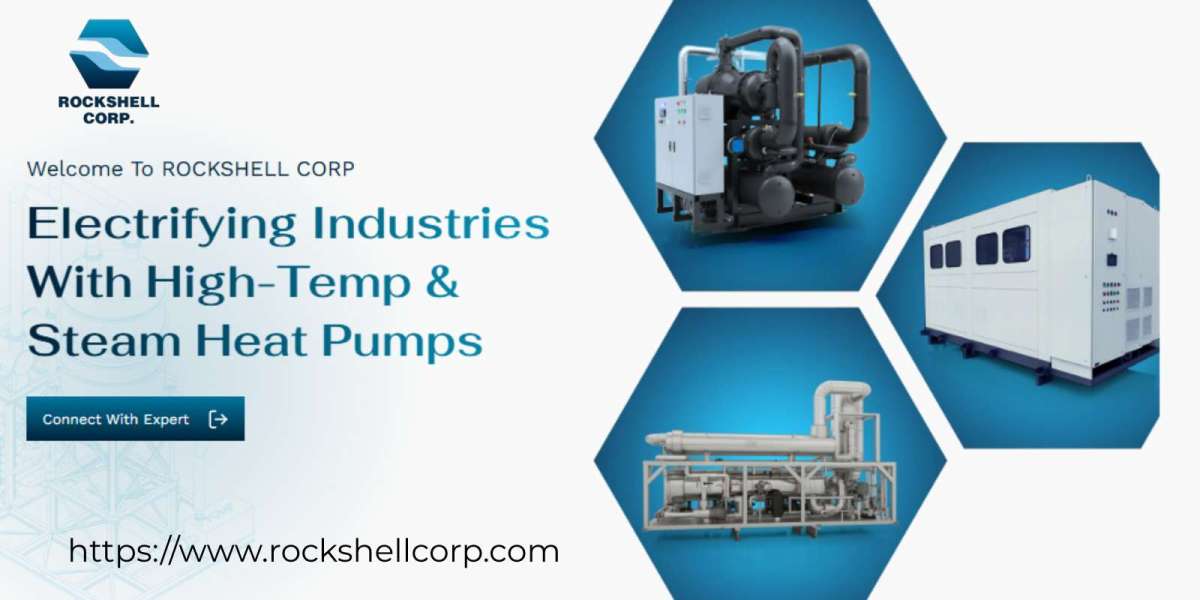

Industrial energy systems are rapidly transitioning toward clean and efficient technologies, and one major innovation leading the change is the industrial heat pump. Many large facilities in sectors like food processing, chemicals, pharmaceuticals, and manufacturing are adopting heat pumps to replace traditional steam boilers, oil heaters, and fossil-fuel combustion systems. A leading Heat Pump Manufacturer India, Rockshell Corp , delivers customized heat pump solutions that help industries reduce fuel consumption, lower operating cost, and dramatically cut carbon emissions.
Why Industrial Heat Pumps Are Critical for Decarbonization
Traditional thermal systems used in large facilities depend on coal, diesel, natural gas, or furnace oil to generate heat. These systems release high volumes of carbon dioxide, nitrogen oxides, and particulate emissions, making them costly and environmentally harmful.
Industrial heat pumps operate differently. They do not burn fossil fuels; instead, they transfer heat from ambient air, water sources, or process waste heat using electrical energy. Since heat pumps can produce 3–5 units of heating output for every unit of electricity consumed, they are significantly more energy-efficient than combustion heating. This high Coefficient of Performance (COP) directly lowers the facility’s carbon footprint.
Waste Heat Recovery Reduces Emissions at Source
Large industrial facilities generate excess heat through compressors, dryers, chillers, ovens, exhaust systems, and hot water discharge lines. This waste heat is often released into the environment without any beneficial use.
Industrial heat pumps capture this low-grade waste heat and upgrade its temperature for process heating, hot water generation, or steam replacement. This eliminates the need for burning additional fuels, leading to a measurable reduction in emissions.
Environmental Benefits of Waste Heat Capture
Lower fuel consumption
Reduced dependence on coal, diesel, and gas
Less heat discharge into the atmosphere
Controlled thermal pollution
Significant operational savings
For energy-intensive factories, waste heat recovery alone can reduce emissions by 20–45%, depending on system design and usage.
Electrification of Process Heating Helps Cut Fuel Use
Industrial heat pumps enable complete or partial electrification of process heating, replacing fuel-fired boilers, thermic fluid heaters, and hot air generators. When powered by renewable grid electricity or rooftop solar, heat pumps generate near-zero carbon emissions.
Many industries currently rely on fossil fuels because of temperature requirements. However, modern high-temperature heat pumps can achieve 80°C–120°C hot water and up to 160°C–180°C steam equivalent without combustion. This makes heat pumps a viable replacement for:
Pasteurization systems
Cleaning-in-place (CIP) systems
Food and beverage processing
Textile dyeing and washing
Pharmaceutical heating procedures
District heating and hot water plants
Since process electrification eliminates fuel storage, combustion losses, burner inefficiency, and stack emissions, carbon levels drop significantly.
Reduced Transmission Losses Improve System Efficiency
Traditional boiler-based thermal systems suffer massive heat losses through flue ducts, pipes, motors, insulation weaknesses, and combustion inefficiency. Heat pumps operate as closed-loop systems, drastically reducing these losses.
Efficiency Advantages
No chimney or flue gas
Minimal standby losses
No combustion inefficiency
Precise temperature control
Linear part-load efficiency
Higher system efficiency means lower power requirement and lower operational emissions.
Carbon Footprint Reduction Through COP Gain
Heat pumps typically maintain a COP between 3 and 5, meaning they deliver more heat energy than the electrical energy consumed. In comparison:
Coal boiler efficiency: 60–70%
Diesel heater efficiency: 65–80%
Gas boiler efficiency: 80–90%
Even when the grid electricity is not fully renewable, a high COP ensures the heat pump emits far less carbon per unit of heat production than any fuel-based system.
Over a 10-year lifecycle, industrial heat pumps can reduce total carbon emissions by 30% to 70%, depending on application intensity and renewable electricity usage.
Supporting ESG, Net-Zero, and Compliance Targets
Global industries are moving toward carbon-neutral manufacturing, green supply chains, and ESG reporting. Industrial heat pumps help organizations meet sustainability benchmarks, including:
Low Greenhouse Gas (GHG) footprint
Lower Scope 1 emissions (on-site fuel burning)
Improved carbon accounting accuracy
Reduced compliance penalties
Higher eligibility for carbon credits and sustainability certifications
Heat pumps are also aligned with global net-zero roadmaps and Clean Industrial Energy initiatives, making them a powerful decarbonization solution for large facilities.
Why Customized Heat Pumps Deliver Higher Impact
Every manufacturing unit has different thermal load patterns, waste heat flows, and operational temperatures. A specialized Heat Pump Manufacturer India like Rockshell Corp offers tailored solutions that match real-time industrial requirements and maximize carbon reduction potential.
Custom engineering enables:
Optimal temperature output
Reduced auxiliary power
Improved integration with existing systems
Higher waste heat utilization
Maximum system uptime and lifecycle efficiency
As a result, overall emission reduction capabilities become more impactful and measurable.
Conclusion
Industrial heat pumps are transforming energy systems across large facilities by replacing fossil-fuel combustion, capturing waste heat, and enabling process electrification. Their high energy efficiency, COP advantage, and compatibility with renewable power make them one of the most effective technologies for industrial decarbonization. As global industries move toward sustainable manufacturing, a trusted Heat Pump Manufacturer India like Rockshell Corp can help organizations reduce operational emissions, lower costs, and align with carbon-neutral goals.