
Introduction
India has strict quality and safety regulations to protect consumers and ensure standardization of products. To meet these regulations, manufacturers must obtain approval from the Bureau of Indian Standards (BIS). Two commonly used terms in this compliance framework are BIS Licence and BIS Registration. Although they are often used interchangeably, they serve different purposes depending on the product category and certification scheme.
This blog explains everything about BIS Licence and BIS Registration, including their meaning, importance, process, documents, and benefits for manufacturers and importers.
What is BIS Licence?
A BIS Licence is an official authorization issued by the Bureau of Indian Standards that allows manufacturers to produce and sell products that conform to Indian Standards (IS). Products covered under mandatory certification schemes must obtain a BIS Licence before being sold in the Indian market.
Once the BIS Licence is granted, the manufacturer is permitted to use the ISI Mark on the certified product, which indicates quality, safety, and regulatory compliance.
What is BIS Registration?
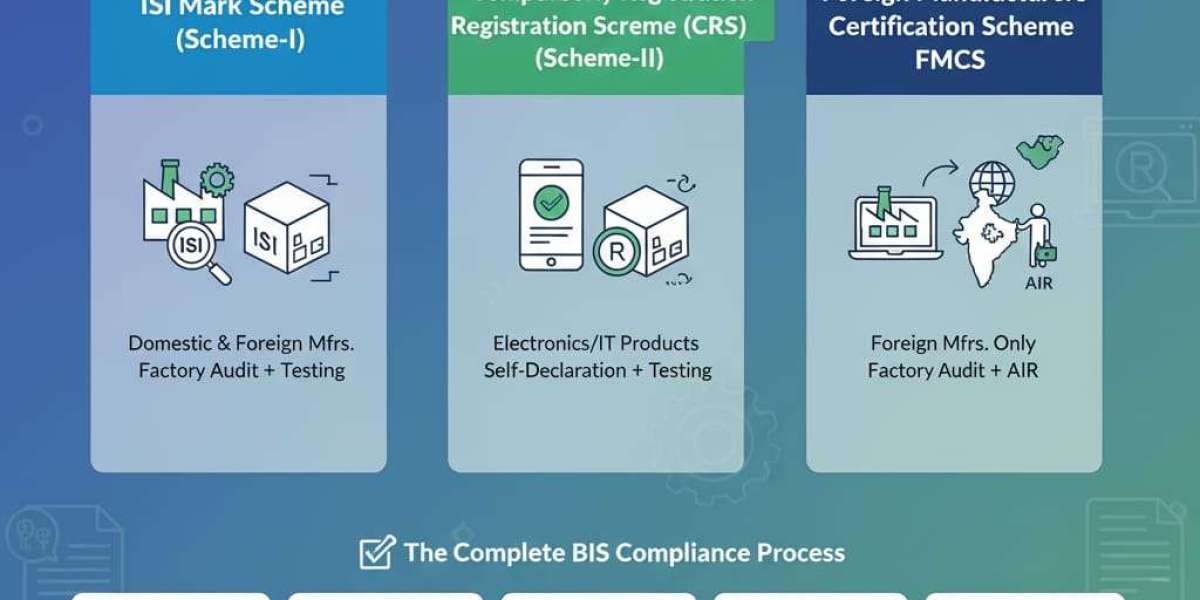
BIS Registration is a simplified certification process mainly applicable under the Compulsory Registration Scheme (CRS). It is primarily required for electronic and IT products such as mobile phones, laptops, LED lights, and power adapters.
Unlike a BIS Licence, BIS Registration does not usually involve factory inspection before approval. Instead, the registration is granted based on successful product testing from BIS-recognized laboratories.
Difference Between BIS Licence and BIS Registration
Understanding the difference between BIS Licence and BIS Registration is important:
BIS Licence is required for products under ISI Mark Scheme
BIS Registration applies to products under CRS
BIS Licence involves factory inspection
BIS Registration is based on test reports
BIS Licence allows ISI Mark usage
BIS Registration requires standard marking with R-number
Both approvals ensure compliance with Indian quality standards.
Who Needs BIS Licence or BIS Registration?
Manufacturers and importers need BIS approval if their products fall under mandatory BIS standards. These include:
Electrical appliances
Electronics and IT equipment
Cement and steel products
Automotive components
Household goods
Industrial materials
Whether you need a BIS Licence or BIS Registration depends on the product category notified by BIS.
Importance of BIS Licence and BIS Registration
BIS approval is not optional for regulated products. Its importance includes:
Legal permission to sell products in India
Compliance with government regulations
Consumer trust and product credibility
Avoidance of penalties and product bans
Smooth customs clearance
Without BIS Licence or BIS Registration, products may be rejected by Indian authorities.
BIS Licence Application Process
The BIS Licence process generally includes the following steps:
Step 1: Application Submission
The manufacturer submits an application with product and factory details to BIS.
Step 2: Product Testing
Samples are tested in BIS-approved laboratories to ensure compliance with Indian Standards.
Step 3: Factory Inspection
BIS officials conduct a detailed inspection of the manufacturing unit, quality control systems, and testing facilities.
Step 4: Grant of BIS Licence
After successful inspection and testing, BIS grants the licence allowing ISI marking.
BIS Registration Process
The BIS Registration process under CRS includes:
Step 1: Online Application
The manufacturer submits an online application along with product details.
Step 2: Product Testing
Samples are tested in BIS-recognized labs as per applicable standards.
Step 3: Registration Approval
Based on test reports and documentation, BIS grants registration with a unique registration number.
This process is usually faster than BIS Licence approval.
Documents Required for BIS Licence and BIS Registration
Common documents include:
Manufacturing license
Product technical specifications
Test reports from BIS-approved labs
Quality control details
Factory layout and process flow
Authorization documents
Complete and accurate documentation is crucial for timely approval.
Validity and Renewal
BIS Licence is generally valid for 1 to 2 years
BIS Registration is typically valid for 2 years
Both approvals must be renewed before expiry to continue legal sales in India.
Benefits of BIS Licence and BIS Registration
Key benefits include:
Access to the Indian market
Increased consumer confidence
Competitive advantage
Compliance with Indian laws
Long-term business growth
Certified products are preferred by distributors and consumers alike.
Conclusion
Both sunconsultants.co.in and BIS Registration are essential regulatory approvals for manufacturers and importers selling products in India. While a BIS Licence is required for products under the ISI Mark Scheme, BIS Registration applies to electronics and IT products under CRS. Understanding the correct certification requirement and following the proper process ensures