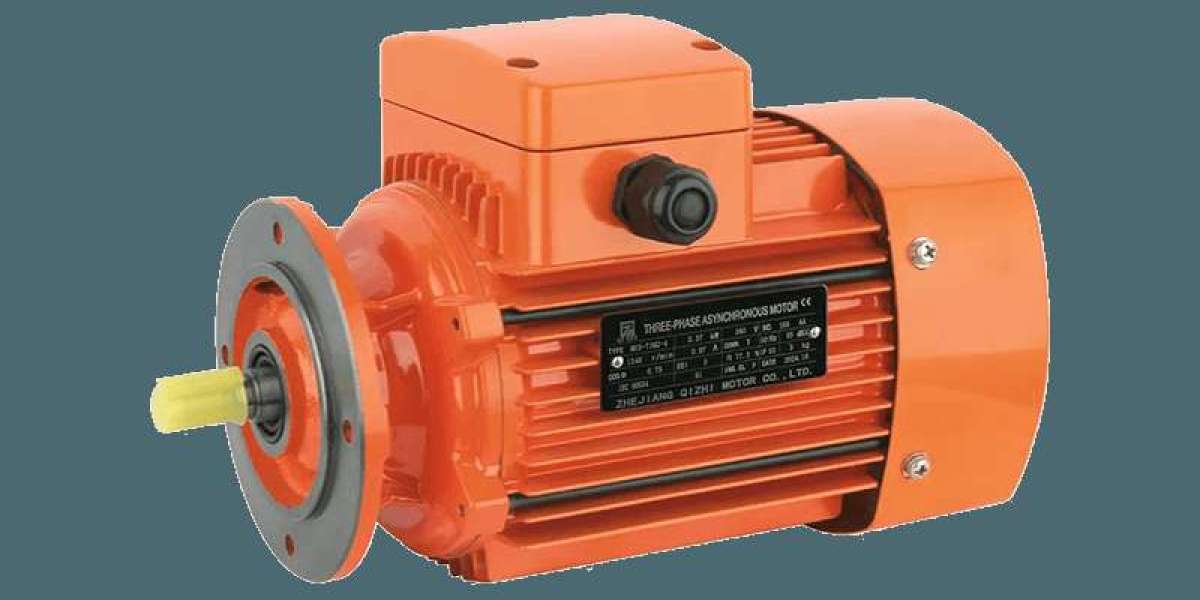

The three phase motor is not merely a component; it is a primary consumer of electrical energy in the industrial and commercial sectors, driving processes that are essential to modern economies. Its applications are ubiquitous, found in systems that provide climate control, process water, move materials, and manufacture goods. Given their vast numbers and continuous operation, the collective energy efficiency of these motors has a profound impact on global electricity consumption and carbon emissions. Consequently, the evolution of three phase motor technology is increasingly focused on maximizing efficiency, integrating with digital networks for smart control, and adapting to new energy paradigms. The future of this venerable technology lies in becoming smarter, more efficient, and more seamlessly connected within the industrial ecosystem.
The range of applications for three phase motors is extensive. In HVAC systems, they drive the compressors in chillers and the fans in large air handling units. In water and wastewater treatment, they power pumps, aerators, and mixers. Throughout manufacturing, three phase motors are inside machine tools, robotic arms, extruders, and packaging lines. The mining and materials sector uses them to run crushers, conveyors, and grinding mills. The consistent, reliable power of a three phase induction motor makes it suitable for all these roles. For applications requiring adjustable speed—such as a pump where flow needs to vary—the motor is increasingly paired with a Variable Frequency Drive (VFD). This pairing not only provides control but can dramatically reduce energy consumption by allowing the motor to run only as fast as needed, rather than at full speed with output throttled.
Energy efficiency has become a central driver in three phase motor development and regulation. Governments and international bodies have established efficiency classification systems, such as the IE (International Efficiency) codes. A standard IE2 motor is considered high efficiency, while IE3 denotes premium efficiency, and IE4 represents super-premium efficiency. These gains are achieved through improved design: using more copper in the windings to reduce resistance, employing higher-quality steel laminations with lower magnetic losses, optimizing the air gap between rotor and stator, and improving aerodynamic cooling. Upgrading an older, standard-efficiency three phase motor to a modern premium-efficiency model can yield significant electricity cost savings with a relatively short payback period, making it a key strategy for industrial energy management.
Looking forward, the three phase motor is becoming a node in the Industrial Internet of Things (IIoT). Modern motors can be equipped with integrated sensors that monitor temperature, vibration, and electrical parameters. This data can be communicated via networks to centralized control systems, enabling predictive maintenance. Instead of running to failure or being serviced on a fixed schedule, a smart three phase motor can signal when its bearings are wearing out or when it is operating outside normal parameters, preventing unexpected downtime. Furthermore, integration with broader plant automation systems allows for optimized control strategies that consider process demands, energy tariffs, and equipment health. The motor is evolving from a standalone device into an intelligent, connected asset.
The three phase motor continues to be an indispensable force in industry, but its role is transforming. While its core electromagnetic principle remains constant, the emphasis is now on optimizing its operation within complex systems for sustainability and intelligence. The push for higher efficiency standards reduces operational costs and environmental impact, while digital integration unlocks new levels of reliability and control. As industries strive for greater automation and lower carbon footprints, the humble three phase AC motor is advancing to meet these challenges. It will remain the fundamental prime mover, but its future is one of enhanced connectivity, intelligence, and efficiency, ensuring it powers industry not just with brute force, but with smart, sustainable performance for decades to come.