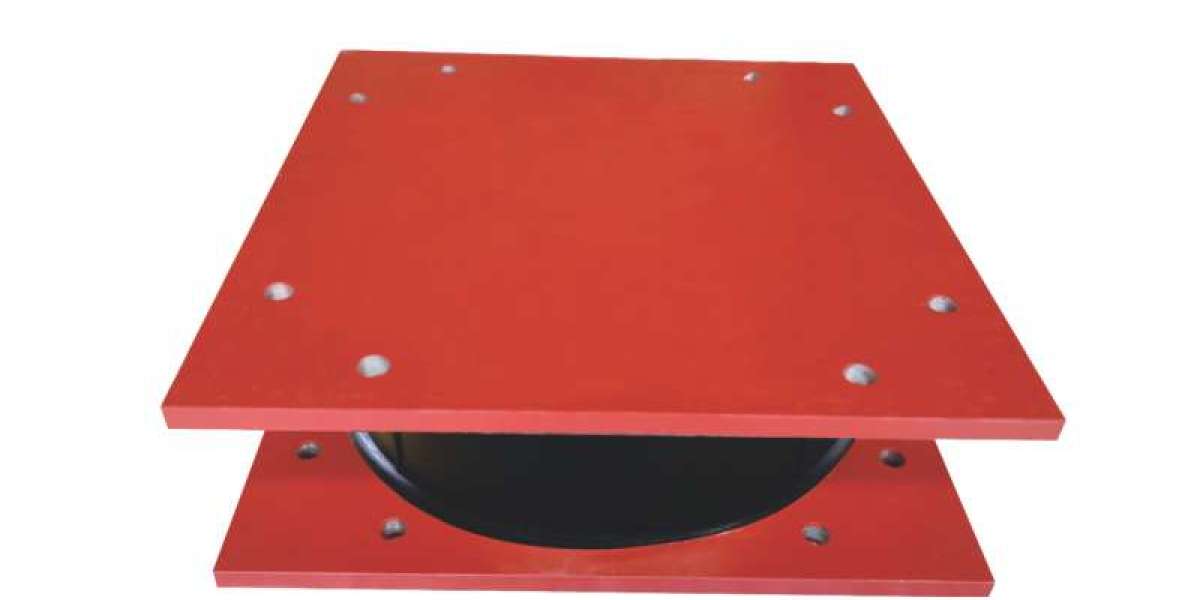

The adoption of lead rubber bearings in seismic protection relies on confidence in their long-term performance and their ability to function as designed during a rare, extreme event. Unlike many structural components, these bearings must remain reliable while sitting dormant for decades before being called upon to perform. Therefore, understanding their aging characteristics, verifying their performance through rigorous testing, and pursuing continuous innovation are crucial aspects of the technology. The field of seismic isolation is not static, and ongoing research into lead rubber bearing materials, configurations, and monitoring techniques aims to enhance their reliability, longevity, and scope of application for the infrastructure challenges of the future.
A primary concern for any elastomeric bearing is its long-term durability. The rubber compound is formulated to resist environmental degradation from ozone, oxygen, and ultraviolet light, especially since bearings in bridges may be partially exposed. The laminated steel plates are protected against corrosion. The lead core, being encapsulated, is not subject to oxidation. Manufacturers conduct accelerated aging tests on rubber samples to predict performance over a typical 50- to 100-year design life. Furthermore, lead rubber bearings are designed with substantial safety margins. The design displacement—the maximum movement they are engineered to accommodate—is significantly less than their ultimate failure displacement. This built-in redundancy ensures that even under extreme or beyond-design-basis shaking, the bearing has a reserve capacity to prevent collapse, providing a critical margin of safety.
The performance of a lead rubber bearing is conclusively validated through standardized physical testing. Prototype bearings for a specific project are subjected to a battery of tests that simulate a lifetime of service and extreme seismic demands. These tests include: compression tests to verify vertical stiffness under the design load; shear tests under constant vertical load to establish the bearing's force-displacement hysteresis loop, confirming its effective stiffness and damping properties; and tests for stability at large displacements. The most critical is the dynamic test, where the bearing is subjected to cyclic shear deformations at varying amplitudes and frequencies, mimicking the demands of a real earthquake. This testing regimen provides the empirical data that gives engineers and building officials the confidence to approve the use of these bearings in life-safety-critical applications.
Innovation in lead rubber bearing technology focuses on enhancing performance and addressing specific challenges. One area of development is in high-damping rubber (HDR) bearings, which attempt to provide energy dissipation through the rubber compound itself, eliminating the lead core. However, the stable, predictable hysteretic behavior of the lead core in a traditional lead rubber bearing remains a benchmark. Current research explores refined rubber compounds for better low-temperature performance or increased durability. Another trend is the development of bearings with adaptive or multi-stage performance, which might have different stiffness or damping properties at different levels of displacement. Additionally, the integration of structural health monitoring (SHM) sensors into or alongside bearings is gaining interest. These sensors could monitor temperature, displacement, or even the condition of the lead core, providing data for predictive maintenance and post-earthquake damage assessment.
The lead rubber bearing is a mature technology backed by decades of research, testing, and proven performance in actual earthquakes. Its long-term reliability is ensured through careful material science, conservative design, and comprehensive qualification testing. While the fundamental principle remains sound, the field continues to evolve, with innovations aimed at improving material properties, exploring new configurations, and integrating smart monitoring capabilities. This commitment to advancement ensures that lead rubber bearing technology will continue to be at the forefront of seismic protection, adapting to meet the demands of taller buildings, longer bridges, and the ever-present need to safeguard our constructed environment against seismic forces with robust and predictable performance.