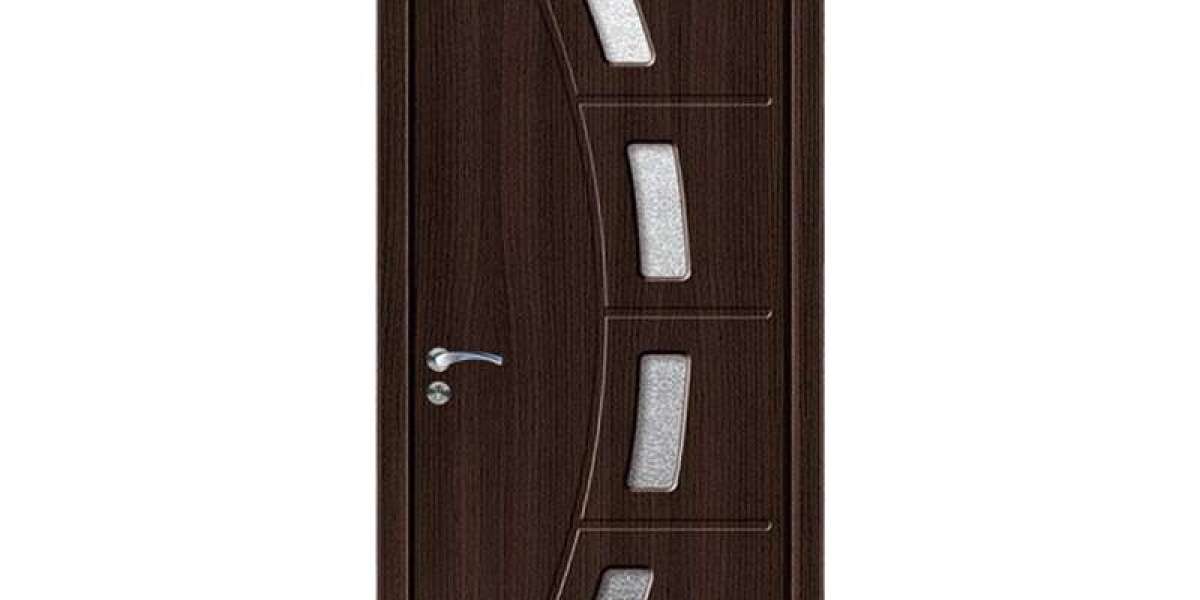

The journey of a modern PVC door from raw material to a finished product installed in a home or building is a coordinated sequence of industrial processes that take place within a specialized PVC door factory. This type of manufacturing facility is designed to transform polyvinyl chloride (PVC) compound, a versatile and durable plastic, into rigid, insulating door profiles and complete assemblies. A typical factory integrates extrusion, fabrication, and assembly lines under one roof, allowing for efficient production flow and quality control. The operation of a PVC door factory hinges on precision machinery, standardized procedures, and a focus on creating products that offer durability, thermal efficiency, and design consistency. Understanding this production flow reveals how a commodity plastic is engineered into a high-performance building component.
The process begins with the extrusion line, the heart of the factory. Here, PVC resin—a white powder—is mixed with stabilizers, modifiers, and colorants in a compounding unit to create a homogeneous blend. This raw material is then fed into an extruder, a machine that uses a rotating screw to melt and push the plastic through a shaped die. The die is a precision metal tool that forms the molten PVC into the specific hollow profile shape of the door frame, sash, and reinforcing bars. As the profile emerges, it is pulled through a calibrator and cooling tank to set its dimensions. This continuous PVC profile is then cut to the required lengths for door production. The quality of extrusion is critical, as it determines the profile's dimensional accuracy, surface finish, and structural integrity, which are foundational for the final door.
Once the profiles are extruded and cooled, they move to the fabrication department of the factory. Here, computer-controlled cutting and machining centers perform several operations. Profiles are cut to precise angles for corner assembly. Holes are routed for hardware such as locks, hinges, and handles. Grooves are milled for glazing beads and weather seals. For reinforcement, steel or aluminum inserts are cut and prepared to be placed inside the hollow chambers of the main PVC profiles, greatly enhancing the door's strength and rigidity to support glass panels and resist wind load. This stage requires high precision, as inaccuracies in machining will affect the fit, function, and sealing capability of the finished PVC door.
The final stage is assembly. In this area of the factory, the machined PVC profiles are joined together. Corner welding is a key process; the ends of the frame and sash profiles are heated with a specialized welding machine and then pressed together to form a strong, seamless bond. The welds are then cleaned to ensure a smooth appearance. Next, the reinforcement inserts are secured inside the profiles. The door is then fitted with its hardware—hinges, multi-point locking systems, and handles. Finally, the glazing unit (insulated glass) is installed into the sash, held in place with PVC glazing beads and sealed to be weatherproof. Each assembled door undergoes quality checks for squareness, operation of hardware, and visual appearance before being packaged for shipment.
A PVC door factory is a model of integrated, material-specific manufacturing. It leverages the extrudability and stability of PVC to produce consistent, complex profiles that form the basis of a high-performance door. Through a streamlined process of extrusion, precision fabrication, and meticulous assembly, the factory transforms raw plastic compound into a finished product ready for the construction market. The efficiency of this vertical production allows a PVC door factory to offer durable, energy-efficient, and low-maintenance doors that meet the demands of modern building standards, demonstrating how focused industrial processes add significant value to a base polymer.