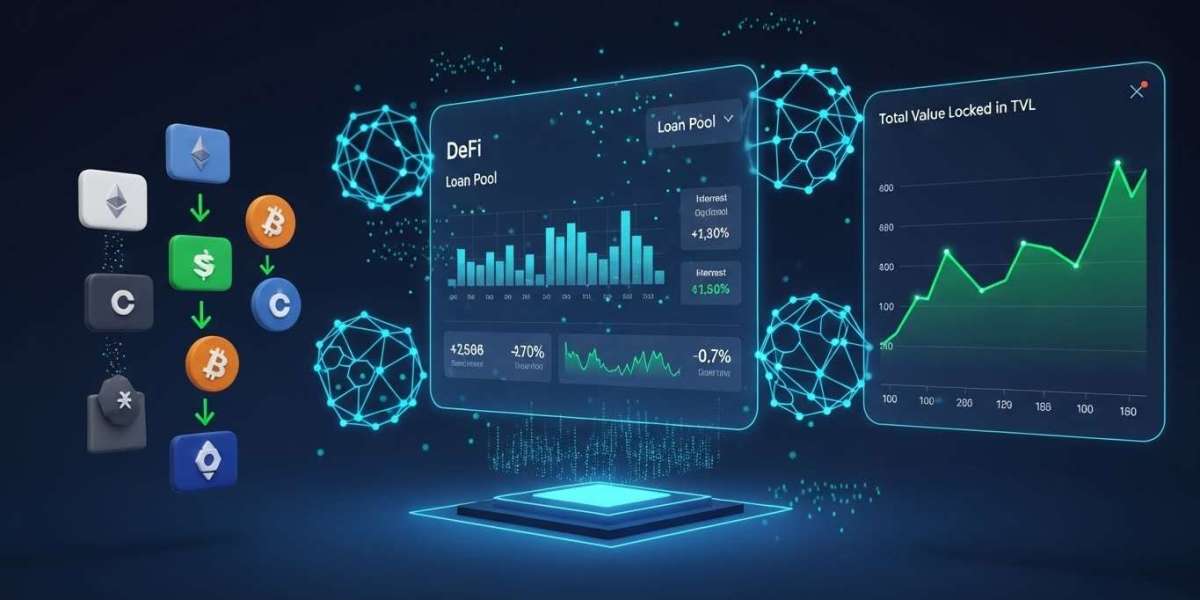

Decentralized Finance (DeFi) has revolutionized traditional financial systems by providing blockchain-based solutions that eliminate intermediaries and enhance financial inclusivity. Among the most impactful applications of DeFi are lending and borrowing platforms, which empower individuals and businesses to access liquidity without relying on conventional banks. These platforms operate on smart contracts, enabling secure, transparent, and automated transactions. For startups and investors exploring opportunities in the DeFi space, understanding the mechanics, benefits, and challenges of these platforms is crucial. DeFi lending platform development services are increasingly in demand as businesses recognize the potential to offer decentralized credit solutions, optimize interest generation, and leverage tokenized assets for financial growth.
Core Mechanics of DeFi Lending Platforms
Understanding the fundamental mechanics of DeFi lending platforms is essential for both startups and investors seeking to leverage this technology. These platforms are built on blockchain protocols that eliminate intermediaries and facilitate direct interaction between borrowers and lenders. Smart contracts automate essential processes such as loan issuance, interest calculation, and collateral management, ensuring transparency and security. By grasping how these mechanisms function, businesses can design efficient platforms, and investors can evaluate risks and returns accurately. DeFi lending platform development services provide the expertise needed to implement these core mechanics effectively, ensuring operational reliability and scalability.
Smart Contract Automation: Smart contracts are self-executing programs that automatically enforce loan terms without intermediaries. They ensure that repayments, interest accrual, and collateral liquidation happen according to predefined rules, minimizing human error and operational costs.
Collateralization: Borrowers provide digital assets as collateral to secure loans. This mechanism reduces the risk for lenders while allowing borrowers to access liquidity without selling their assets. High over-collateralization is common to safeguard lenders against market volatility.
Interest Rate Determination: Interest rates on DeFi lending platforms are often algorithmically determined based on supply and demand. These dynamic rates encourage optimal utilization of funds while providing competitive returns for lenders.
Benefits for Startups and Investors
The advantages of DeFi lending platforms extend far beyond traditional banking models, creating opportunities for startups to innovate and for investors to diversify their portfolios. By eliminating intermediaries, these platforms provide global accessibility and enhanced capital efficiency. Lenders can earn attractive yields on idle assets, and borrowers can access funds without liquidating valuable holdings. Transparency, security, and ease of use further enhance trust among participants. Startups can leverage these benefits to attract a broad user base and create innovative financial products, with support from defi lending platform development services to implement these advantages effectively and securely.
Global Accessibility: Anyone with an internet connection can participate as a lender or borrower, significantly expanding the market beyond geographical limitations. Startups can tap into a global user base without the need for physical infrastructure.
Liquidity Optimization: Lenders can earn interest on idle assets, while borrowers can obtain immediate capital without liquidating holdings. This dual benefit enhances capital efficiency for both parties involved.
Transparency and Security: All transactions are recorded on public blockchains, ensuring transparency and auditability. Investors gain confidence from verifiable activity, and startups benefit from reduced regulatory friction when protocols are properly structured.
Risk Management Strategies
Effective risk management is a cornerstone of sustainable DeFi lending platforms. Despite the numerous benefits, these platforms face unique challenges such as smart contract vulnerabilities, market volatility, and regulatory uncertainties. Understanding and mitigating these risks is critical for protecting both investors and borrowers. Startups need to incorporate automated safeguards, robust auditing procedures, and compliance measures to minimize exposure to losses. By integrating these risk management strategies into platform architecture, businesses can ensure long-term viability and build investor confidence, often with the technical guidance of defi lending platform development services to achieve secure and resilient operations.
Smart Contract Vulnerabilities: Coding errors or exploits can lead to significant financial losses. Regular audits and adopting industry-standard security protocols are essential to safeguard platform assets.
Market Volatility: The value of collateralized digital assets can fluctuate, potentially causing liquidation events. Platforms often include automated liquidation mechanisms and risk assessment tools to mitigate losses.
Regulatory Considerations: DeFi platforms operate in a complex regulatory environment that is constantly evolving. Ensuring compliance with local and international regulations protects the platform and instills investor confidence.
Innovative Features Enhancing User Experience
Modern DeFi lending platforms are continuously evolving to provide more sophisticated features and improve user experience. These innovations attract a broader audience by offering advanced financial tools, higher returns, and seamless cross-platform interaction. Features such as flash loans, tokenized assets, and cross-chain functionality create opportunities for users to optimize capital utilization and explore innovative strategies. Implementing these features requires in-depth technical expertise, security considerations, and careful interface design. Startups often rely on defi lending platform development services to ensure these advanced capabilities are integrated effectively, providing a reliable, user-friendly, and competitive platform in the rapidly evolving DeFi ecosystem.
Flash Loans: These are uncollateralized loans that must be repaid within a single transaction block. Flash loans open opportunities for arbitrage and other advanced financial strategies, providing users with sophisticated liquidity solutions.
Tokenization and Yield Farming: Lenders can receive interest-bearing tokens that represent their deposits, which can then be utilized in other DeFi protocols. This creates a compounding effect on capital and enhances overall returns.
Cross-Chain Functionality: Enabling operations across multiple blockchains allows users to access broader liquidity pools. Cross-chain support ensures that users are not limited to a single ecosystem, expanding platform appeal.
Conclusion
DeFi lending and borrowing platforms have redefined capital flow in decentralized financial ecosystems, offering unprecedented opportunities for startups and investors to participate in transparent, automated, and global finance. By leveraging smart contracts, collateralized lending, and advanced features such as flash loans and cross-chain functionality, these platforms maximize efficiency and capital utilization. Effective risk management and compliance remain critical for sustainable growth. Startups seeking to enter this space benefit from specialized DeFi lending platform development services, which ensure the creation of secure, scalable, and user-centric platforms capable of thriving in the evolving DeFi landscape.