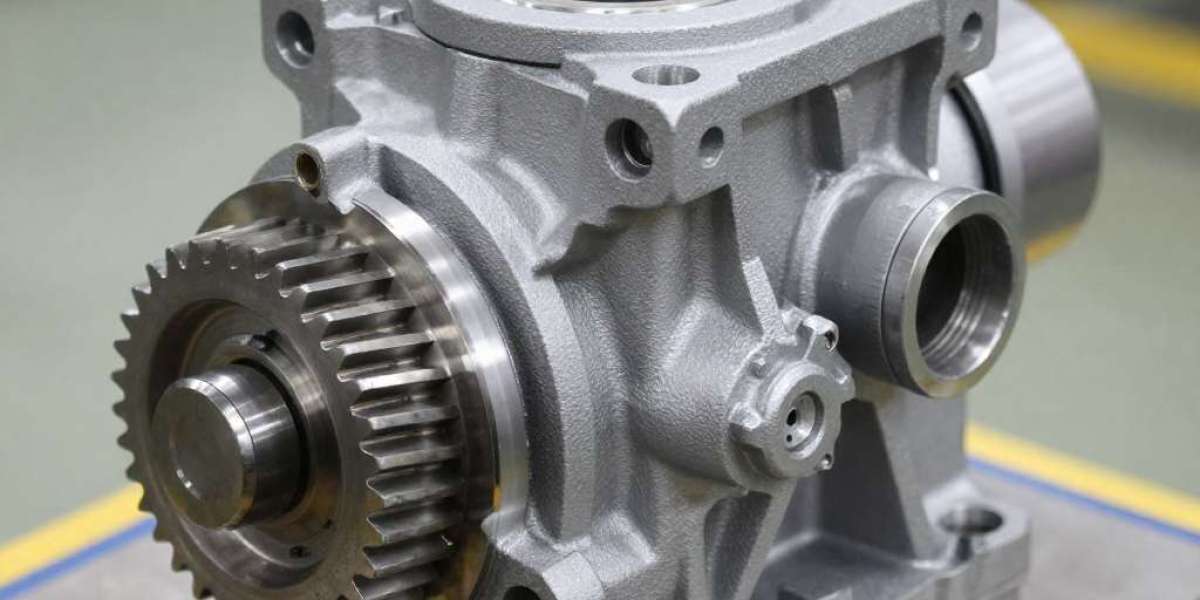

You don’t usually think about torque until it disappears.
A conveyor hesitates. A compact machine struggles under load. Rotation feels uneven, not broken, just uncertain. These moments don’t signal failure, but they hint at something deeper—how power is being generated, transferred, and controlled.
In hydraulic systems, rotation is conversation. Pumps speak first, motors reply, and the system listens to the result. When that conversation flows smoothly, motion feels effortless. When it doesn’t, inefficiency quietly takes hold.
At the heart of this exchange are components that rarely get attention: the hydraulic internal gear pump, the servo drive hydraulic pump, and the increasingly critical role of small hydraulic motors. Understanding how these elements work together reshapes the way you think about hydraulic motion.
Why Rotation Defines Hydraulic Behavior
Linear motion often gets the spotlight, but rotation does the heavy thinking.
Rotational components set rhythm, determine responsiveness, and influence efficiency long before actuators ever move. Pumps establish flow characteristics. Motors translate flow into torque. The relationship between them defines how predictable a system feels.
When rotational behavior is stable, everything downstream benefits. When it isn’t, no amount of valve adjustment fully compensates.
This is why gear pumps and hydraulic motors remain foundational even as control technologies evolve.
The Character of the Hydraulic Internal Gear Pump
A hydraulic internal gear pump behaves differently than most people expect.
Instead of aggressive flow pulses, it delivers smooth, consistent output. Its internal meshing geometry reduces pressure ripple, minimizes noise, and supports stable low-speed operation.
For you, this translates into predictability. Flow arrives steadily. Pressure builds smoothly. Control elements don’t have to fight turbulence or inconsistency.
This is one reason internal gear pumps continue to thrive in applications demanding precision rather than brute output.
Internal Calm Versus External Force
The difference between internal and external gear designs isn’t just mechanical—it’s behavioral.
An internal and external gear pump comparison often reveals contrasting personalities. External gear pumps tend to deliver higher pressure with more pronounced pulsation. Internal gear pumps favor smoothness and efficiency at moderate pressures.
Neither design is inherently better. The choice depends on what kind of conversation you want your system to have.
When smooth control matters more than raw force, internal gear designs often feel more cooperative.
Why Smooth Flow Matters More Than Maximum Pressure
Pressure is easy to measure. Smoothness is harder to quantify.
Yet smooth flow determines how valves respond, how motors rotate, and how long components last. Pulsation creates micro-shocks that wear seals, fatigue housings, and generate noise.
Internal gear pumps reduce those stresses by maintaining consistent tooth engagement and continuous fluid transfer.
Over time, that calmness becomes reliability.
The Rise of the Servo Drive Hydraulic Pump
The servo drive hydraulic pump represents a philosophical shift in system design.
Instead of running continuously and letting valves manage excess, servo-driven pumps adjust speed dynamically. Flow matches demand. Pressure rises intentionally rather than reactively.
This transforms the pump from a constant force into a responsive participant.
For you, the system feels lighter, quieter, and more controlled.
Why Servo Drives Change How Gear Pumps Behave
When paired with servo drives, gear pumps reveal a new side of their personality.
Instead of operating at fixed speeds, they respond to real-time requirements. This reduces energy waste and heat generation while improving control accuracy.
The combination of servo drives and internal gear pumps is especially effective in applications requiring stable flow across varying load conditions.
Motion becomes deliberate rather than forced.
Small Hydraulic Motors: The Quiet Workhorses
Small hydraulic motors rarely draw attention, yet they define how systems feel in operation.
They convert flow into torque with surprising finesse. In compact equipment, mobile machinery, and auxiliary systems, these motors handle tasks that demand precision rather than sheer output.
Their size makes efficiency and control especially important. Excess flow or unstable pressure affects them immediately.
When properly matched with smooth-flow pumps, small motors deliver consistent torque and predictable speed.
Why Motor Behavior Reflects Pump Quality
Motors don’t hide upstream problems.
If flow pulses, motors vibrate. If pressure fluctuates, torque becomes uneven. When motors struggle, the issue often originates at the pump.
This is why selecting a pump-motor pairing matters more than selecting either component alone.
A well-matched internal gear pump and small motor combination creates rotation that feels intentional rather than reactive.
The Misleading Simplicity of “Hydraulic Motors for Sale”
Searching for hydraulic motors for sale often starts with symptoms rather than strategy.
Speed feels inconsistent. Torque drops under load. Heat increases. Replacing the motor seems logical, but the root cause frequently lies elsewhere.
Flow instability, mismatched displacement, or pump inefficiency can all mimic motor failure.
Understanding system behavior before replacement prevents repeating the same issues with new components.
Torque Is a System Outcome, Not a Motor Feature
Torque isn’t generated in isolation.
It results from flow quality, pressure stability, and load conditions. A motor can only perform as well as the hydraulic environment supporting it.
When systems rely on smooth-flow pumps and responsive drive control, motors operate within optimal ranges. Stress decreases. Efficiency improves.
Torque becomes reliable rather than unpredictable.
Internal and External Gear Pumps in Real Applications
Both internal and external gear pumps remain relevant because applications demand different behaviors.
External gear pumps thrive in rugged environments where simplicity and high-pressure capability matter. Internal gear pumps excel in systems prioritizing smoothness, efficiency, and noise reduction.
Servo-driven configurations allow both designs to operate more intelligently, reducing their traditional limitations.
The choice becomes less about superiority and more about system intent.
Why Noise Is an Early Warning Signal
Noise isn’t just an annoyance. It’s feedback.
Gear mesh irregularities, pressure ripple, and cavitation all announce themselves acoustically before causing failure. Internal gear pumps often operate quieter because of continuous tooth engagement.
Listening to a system tells you how well its components are cooperating.
Quiet systems are usually healthy systems.
Heat as a Measure of Efficiency
Heat reveals inefficiency faster than gauges.
Excess heat indicates throttling losses, pressure mismatch, or overproduction of flow. Servo drive hydraulic pump reduce these issues by matching output to demand.
Lower heat means longer component life and more stable fluid properties.
When systems run cool, everything lasts longer.
Integration Over Individual Performance
No pump operates alone. No motor works independently.
True system performance emerges from integration. Pump characteristics, motor displacement, control strategy, and load profile must align.
When they do, systems feel effortless. When they don’t, even premium components struggle.
You stop asking which component is best and start asking which combination works best together.
Learning From Application-Focused Design
Understanding how internal gear pumps, servo drives, and small motors behave in real systems matters more than reading catalogs.
Engineering-focused platforms like THM Huade offer insights into how these components interact across diverse applications.
That context helps you design systems that perform consistently beyond theoretical conditions.
Why Modern Hydraulics Favors Cooperation
Hydraulics has always delivered power.
Now it delivers cooperation.
Pumps listen to demand. Motors respond predictably. Control systems guide behavior rather than correct mistakes.
This cooperative approach reduces stress, improves efficiency, and increases trust in the machine.
The Quiet Confidence of Well-Matched Systems
Well-designed systems don’t announce their presence.
They don’t surge unexpectedly. They don’t whine under load. They don’t require constant adjustment.
They simply rotate, reliably and consistently.
That quiet confidence defines modern hydraulic performance.
Conclusion
A hydraulic internal gear pump sets the tone for smooth flow. A servo drive hydraulic pump introduces intelligence. Small hydraulic motors translate that intelligence into usable torque. Understanding the balance between internal and external gear pump designs helps you shape system behavior intentionally.
Searching for hydraulic motors for sale becomes less urgent when systems are designed thoughtfully from the beginning.
Hydraulic motion isn’t about force alone.
It’s about how smoothly that force moves through the system.
And smoothness is what turns power into trust.