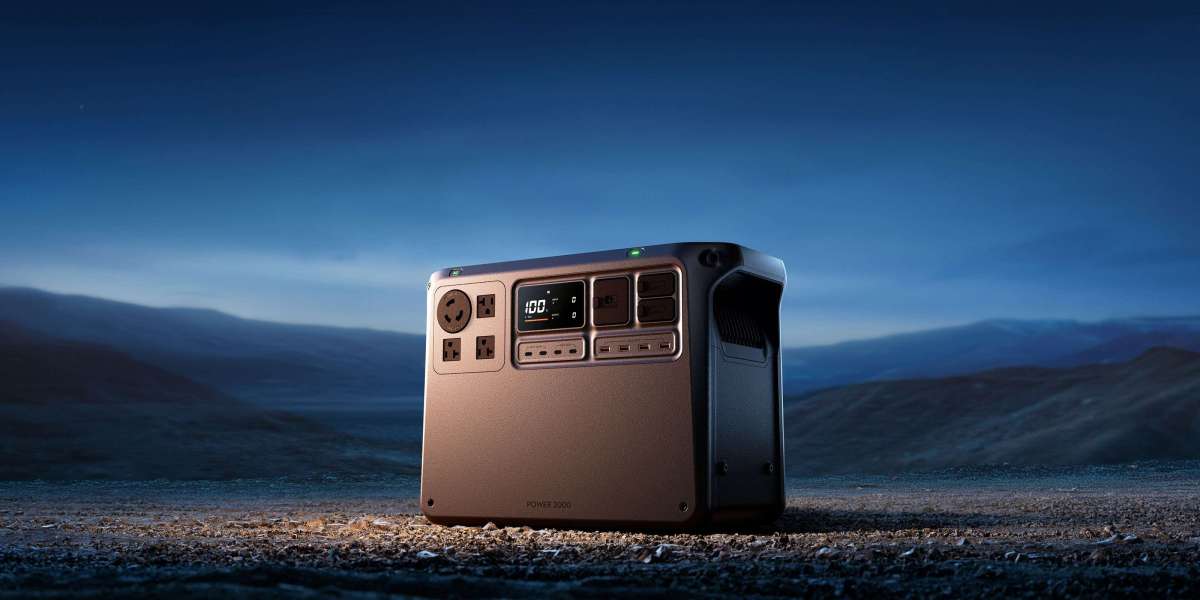

The transition from controlled studio environments to the unpredictable beauty of the field has redefined modern cinematography. Creators no longer wait for the perfect conditions; they bring the studio to the location. However, this freedom depends entirely on energy independence. Without a high-capacity portable power station, the most advanced camera is merely a heavy piece of glass. Mastering your off-grid energy strategy is the invisible foundation of successful remote production, ensuring that your creative momentum is never interrupted by a flickering battery icon or a dead editing laptop.
The Rise of the Decentralized Creative Workflow
We have entered an era where the most compelling stories are often found miles away from the nearest wall outlet. Whether it is a documentary filmmaker capturing the silence of a desert or a travel vlogger documenting a remote village, the demand for high-fidelity content remains the same. This decentralized workflow requires a new way of thinking about logistics. In the past, location shoots were limited by the length of a heavy-duty extension cord or the loud, vibrating noise of a combustion engine. Today, the focus has shifted toward compact, silent, and incredibly dense energy storage units that can live right on the set.
A professional field studio is more than just a camera and a tripod; it is a complex ecosystem of high-draw devices. A typical day of shooting might involve a mirrorless camera, several LED light panels, a secondary monitor, a wireless audio system, and a high-performance laptop for real-time file backups and proxy editing. Each of these components sips or gulps energy at different rates. The challenge for the modern creator is to serve as their own utility company, managing a finite budget of watt-hours to ensure the lights stay on until the sun goes down.
Defining Capacity Needs for Modern Gear
Understanding the difference between raw power and stored capacity is the first step in building a resilient field kit. Most creators look at the peak wattage a device can handle, but for field work, the total capacity is far more relevant. Capacity is essentially the size of your fuel tank. If you are running a laptop that draws sixty watts an hour, a unit with a five-hundred-watt-hour rating will realistically give you about seven to eight hours of editing time after accounting for conversion losses. It is important to calculate these needs before you head into the wilderness.
When selecting a unit for production, you must consider the "surge" requirements of your equipment. While a portable power station is great at providing steady energy, some devices—like a large studio strobe or a specialized high-output LED—can draw a massive spike of energy the moment they are turned on. If the station’s inverter isn't rated to handle that peak, the entire system will shut down to protect itself. Finding the sweet spot between a unit that is light enough to carry and one that is powerful enough to handle your heaviest light panel is the primary logistical hurdle of mobile filmmaking.
The Importance of Silent Operation on Set
One of the most overlooked advantages of battery-based systems over traditional gas-powered units is the total absence of mechanical noise. In professional video production, audio is often more important than visual quality. A noisy generator humming in the background can ruin a high-stakes interview or distract a subject during a sensitive moment. With silent battery units, you can place your power source directly under the tripod or behind a light stand without any acoustic interference.
This silence also opens up new creative possibilities in locations that were previously inaccessible. National parks, quiet residential neighborhoods, and sacred sites often have strict noise ordinances. Being able to operate a full professional lighting rig in total silence allows you to capture the authentic atmosphere of these places without being a nuisance. It creates a respectful presence on location, allowing the natural sounds of the environment—the rustle of leaves or the distant call of a bird—to be the only thing your microphones pick up.
Mastering Sustained Energy Through Natural Harvesting
For long-term expeditions that span several days or weeks, even the largest battery will eventually run dry. This is where the transition from a simple battery to a complete solar generator becomes essential. By integrating high-efficiency monocrystalline panels into your workflow, you create a closed-loop system where the sun replenishes what the camera consumes. This doesn't just extend your shooting time; it provides a psychological safety net that allows you to take more risks with your creative choices.
Modern solar technology has moved away from the heavy, fragile glass panels of the past toward lightweight, folding arrays that can be strapped to a backpack or draped over the hood of a vehicle. These panels are designed to capture a wide spectrum of light, meaning they can still provide a "trickle charge" even on overcast days. For a production team, this means that while the B-roll is being shot, the station is back at base camp, soaking up the photons needed to power the evening’s editing session. It is a harmonious cycle that aligns the rhythm of production with the movement of the sun.
Optimal Panel Placement for Field Reliability
Simply owning panels isn't enough; you have to understand the geometry of light. In the field, every percentage point of efficiency matters. A single shadow from a tree branch falling across a small portion of a solar powered generator panel can significantly reduce the output of the entire array. Professionals often use "solar sundials" or built-in indicators to ensure the panels are tilted at the perfect angle to the sun’s current position. This is an active process that requires attention throughout the day as the sun tracks across the sky.
If you are working in a fixed location for several days, it is worth establishing a dedicated "charging station" in an area with maximum sky exposure. Using long, low-resistance cables allows you to keep the panels in the sun while the actual power unit stays in the shade. Heat is the enemy of battery longevity, so keeping the station cool while the panels are hot is a vital maintenance step. This decentralized approach ensures that you aren't forced to choose between keeping your batteries cool and keeping your panels efficient.
Understanding Inverter Efficiency and Pure Sine Waves
When you are plugging in thousands of dollars of sensitive electronics, the quality of the electricity matters as much as the quantity. A high-quality station uses a "pure sine wave" inverter, which mimics the clean, stable power you get from a home outlet. Cheap inverters often produce a "modified sine wave" that can cause a visible hum in your video monitors, a buzz in your audio recording, or in the worst cases, permanent damage to the delicate circuitry of a laptop or a camera’s internal charger.
The efficiency of these inverters also varies. There is always a "tax" paid when converting stored DC energy into the AC power needed for most wall plugs. This conversion loss can range from ten to twenty percent. For a creator on a tight energy budget, this is a significant factor. Whenever possible, using the direct DC ports—like USB-C Power Delivery or 12V car sockets—bypasses this conversion process, allowing your gear to run longer on the same charge. It is a more efficient way to work and one of the best "hacks" for stretching your energy reserves in the field.
Strategic Power Management in Remote Environments
The difference between a successful remote shoot and a disaster often comes down to energy budgeting. Just as a director of photography manages a shot list, a producer must manage the "watt-list." This involves identifying which devices are essential and which are luxuries. Do you really need to run the high-brightness monitor at 100% all day, or can you use a sun-hood and drop the power draw by half? These small decisions accumulate over a twelve-hour shoot, potentially saving enough energy to power a final evening interview.
I have seen productions fail because they treated their portable energy like an infinite resource. In the field, you must be a disciplined manager of your resources. This means charging your camera batteries during the peak of the day when solar input is highest, rather than waiting until the sun goes down and draining the main station’s reserve. It means shutting down laptops completely when they aren't in use rather than leaving them in sleep mode. This proactive approach to power management is a skill that separates seasoned field producers from novices.
Thermal Management and Equipment Longevity
Batteries are chemical engines, and like all chemical reactions, they are sensitive to temperature. If you are shooting in the high desert, a unit left in the sun can reach temperatures that trigger a safety shut-off. On the other hand, extreme cold can cause a battery to lose its effective capacity almost instantly. Keeping your power station in an insulated bag or a shaded, ventilated area is not just about performance; it’s about protecting the long-term health of the cells.
Modern LiFePO4 (Lithium Iron Phosphate) batteries are much more resilient than the older lithium-ion versions, but they still require respect. They prefer to operate in the same temperature range that humans do. If you are working in sub-zero conditions, many professionals keep their power units inside a heated vehicle or wrapped in a thermal blanket until they are ready to be used. This ensures that the internal resistance stays low and the power delivery stays consistent, preventing those sudden voltage drops that can cause a camera to shut down in the middle of a perfect take.
Expanding Your Setup with Modular Battery Packs
One of the most exciting trends in mobile energy is the move toward modularity. Instead of being stuck with a single fixed capacity, many creators are opting for systems that allow for "expansion batteries." This is a massive advantage for productions that scale in size. For a solo day-trip, you take the lightweight base unit. For a multi-day commercial shoot with a full crew, you daisy-chain two or three expansion packs to create a massive energy reservoir.
This modular approach also makes travel much easier. While there are strict limits on the size of batteries you can take on an airplane, many modular systems allow you to break the components down into smaller, flight-legal pieces. This flexibility ensures that your kit can grow alongside your career. You aren't just buying a gadget; you are investing in a scalable energy infrastructure that can adapt to everything from a local wedding to an international documentary expedition. It is a smarter way to build a kit that remains relevant for years to come.
The Future of Mobile Cinematography
As we look toward the final years of this decade, the integration of energy and imaging technology is becoming more seamless. We are seeing cameras that can be powered directly via a single USB-C cable from a station, eliminating the need for dozens of small, proprietary "dummy" batteries. We are seeing lighting fixtures that are designed for maximum lumens-per-watt efficiency, allowing us to get more light out of smaller batteries. The entire industry is moving toward a more efficient, decentralized, and mobile-first philosophy.
The role of the creator is evolving from someone who merely captures images to someone who manages a complex, self-sufficient mobile studio. The confidence that comes from knowing you have thirty hours of power in your backpack is transformative. It allows you to wait for the light, to do one more take, and to explore that one extra location that wasn't on the original schedule. It removes the "fear of the dark" and replaces it with the freedom of the field. In this new landscape, energy is not a constraint; it is a creative enabler.
As you refine your mobile production kit, remember that the most important tools are the ones that provide the foundation for the rest to function. Whether you are using a high-resolution drone or a specialized gimbal for iphone, your ability to keep that gear moving depends on your energy strategy. The transition to a self-sufficient, off-grid studio is a significant milestone for any creator. It represents a commitment to the craft and a recognition that the best stories often require going where the power lines don't. By mastering your energy needs today, you are ensuring that you have the power to tell the stories of tomorrow, no matter how far off the beaten path they may lead.