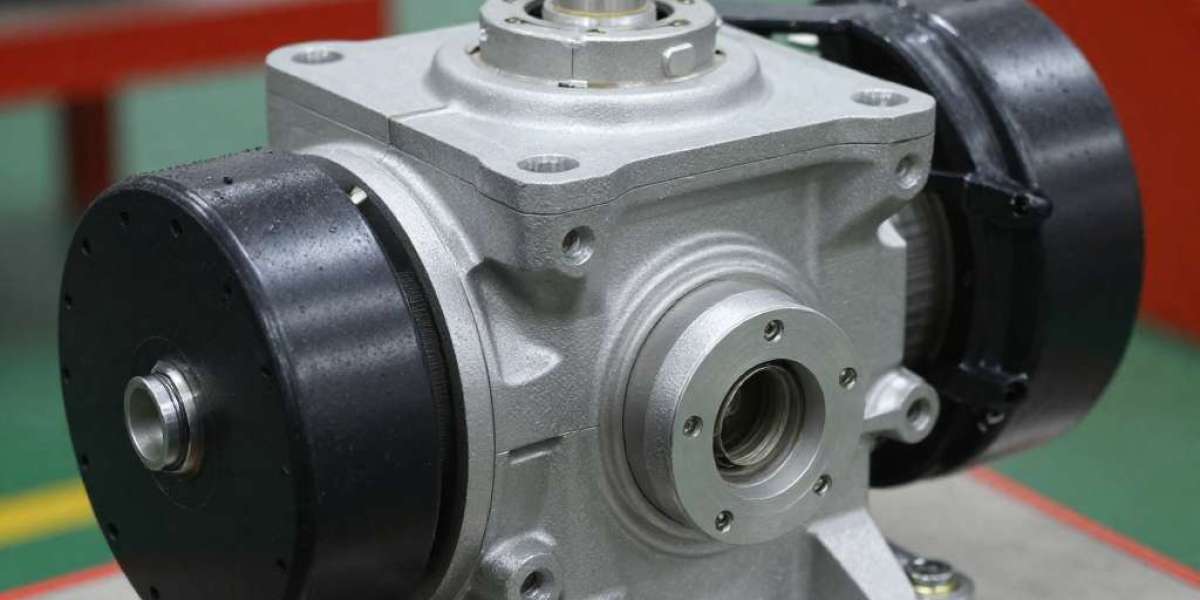

The Moment Hydraulics Became Responsive
You’ve probably worked with hydraulic systems that were undeniably strong—but never quite subtle.
They delivered force reliably, yet wasted energy when demand dropped. They moved loads confidently, but struggled to stay precise at low speeds. And whenever conditions changed, efficiency was often the first casualty.
That changed when the servo driven hydraulic pump entered modern system design.
Instead of forcing hydraulic power to run at a constant pace, servo-driven pumps introduced adaptability. Power output began to follow demand. Motion became smoother. Control became intelligent.
Hydraulics didn’t lose their strength—they gained awareness.
What a Servo Driven Hydraulic Pump Really Changes
A traditional hydraulic pump runs continuously at a fixed speed. Any excess flow is controlled downstream through valves, often generating heat and energy loss.
A servo driven hydraulic pump behaves differently.
Its speed adjusts in real time based on system requirements. When motion slows, the pump slows. When load increases, output rises smoothly. When there’s no demand, energy consumption drops dramatically.
The pump stops being a constant energy source and becomes an active participant in system control.
Why Demand-Based Flow Matters
Hydraulic systems rarely operate at full load all the time.
Most of the time, they move intermittently, position precisely, or hold loads steady. Traditional pumps treat all these states the same. Servo-driven pumps do not.
By generating only the flow and pressure required at any given moment, the system becomes inherently more efficient.
Energy isn’t throttled away—it’s never produced unnecessarily.
The Difference Between Servo and Conventional Pumps
The distinction isn’t just technical—it’s behavioral.
Conventional pumps push fluid and rely on valves to correct excess. Servo-driven pumps anticipate demand and adjust output before correction is needed.
This shift reduces:
Heat buildup
Pressure spikes
Mechanical stress
The system feels calmer, more predictable, and easier to manage.
The Role of the Servo Motor Hydraulic Pump
At the heart of this adaptability is the servo motor hydraulic pump.
The servo motor precisely controls pump speed and torque. Unlike induction motors that operate at fixed speeds, servo motors respond instantly to control signals.
This responsiveness allows the pump to follow motion commands with exceptional accuracy, especially during acceleration, deceleration, and low-speed operation.
Motion stops feeling forced. It starts feeling intentional
Servo Motor Driven Hydraulic Pump and System Stability
A servo motor driven hydraulic pump enhances system stability in ways that aren’t always obvious at first.
Pressure fluctuations decrease. Noise levels drop. Temperature rise slows significantly. Over time, seals last longer, oil stays cleaner, and maintenance intervals extend.
Stability isn’t dramatic—but it’s transformative.
Machines behave consistently shift after shift, regardless of load variation.
Why Mobile Equipment Benefits the Most
Few environments are as unpredictable as mobile machinery.
Loads change without warning. Terrain shifts constantly. Operators demand immediate response. These conditions challenge traditional hydraulic systems.
Servo-driven solutions thrive here.
In hydraulic systems for mobile equipment, servo driven pumps adjust output continuously to match real-world conditions. Power delivery becomes proportional instead of excessive.
The machine adapts instead of fighting resistance.
Smoother Control in Dynamic Conditions
Mobile equipment often requires slow, precise movements followed by rapid repositioning.
Traditional pumps struggle to transition smoothly between these states. Servo-driven pumps excel at it.
Speed changes feel natural. Direction changes feel controlled. Operators gain confidence because the machine responds exactly as expected.
Control becomes intuitive rather than reactive.
Precision Depends on Feedback
No intelligent system works without accurate information.
In servo-driven hydraulic systems, feedback plays a critical role in maintaining control accuracy. A linear position sensor for hydraulic cylinder provides real-time data on piston movement.
This allows the control system to:
Correct position errors instantly
Maintain repeatability under varying loads
Eliminate drift during holding phases
Without feedback, even the best pump control is incomplete.
Why Position Sensors Elevate Pump Performance
It might seem like sensors and pumps operate independently—but they’re deeply connected.
When the system knows exactly where the cylinder is, the servo driven hydraulic pump can adjust flow with precision rather than estimation.
The result is tighter control loops, smoother motion profiles, and greater overall efficiency.
Information makes power usable.
Low-Speed Performance Without Compromise
Low-speed control has always been a challenge in hydraulics.
At slow speeds, flow inconsistencies become obvious. Jerky motion, stick-slip behavior, and poor positioning often appear.
Servo-driven pumps dramatically improve low-speed performance by maintaining stable flow even at minimal output levels.
This opens the door to applications that once required electric actuators—without sacrificing hydraulic force.
Heat Reduction Through Intelligent Pump Control
Heat is often treated as an unavoidable side effect of hydraulics.
Servo-driven systems challenge that assumption.
By eliminating unnecessary flow generation, servo driven hydraulic pumps reduce energy losses that normally convert into heat. Cooler oil preserves viscosity, protects seals, and stabilizes system behavior.
Cooling systems work less. Reliability improves naturally.
Energy Efficiency That Adds Up Over Time
The efficiency benefits of servo driven pumps compound over time.
Even modest reductions in power consumption become significant when machines operate daily, across years of service. Lower energy usage also reduces thermal stress and mechanical wear.
Efficiency isn’t just about savings—it’s about sustainability and longevity.
Reduced Mechanical Stress on Components
Sudden pressure changes introduce shock loads into hydraulic systems.
Servo-driven pumps minimize these shocks by controlling acceleration and deceleration smoothly. Pressure builds gradually rather than abruptly.
This protects components like:
Cylinders
Valves
Hoses
Seals
The system ages more gracefully because it’s not constantly being stressed.
Maintenance Shifts From Reactive to Predictive
Traditional systems often fail suddenly.
Servo-driven systems tend to degrade gradually. Changes in response time, efficiency, or positioning accuracy are easier to detect when feedback data is available.
Maintenance becomes proactive instead of reactive.
Predictability reduces downtime and improves planning.
Operator Experience Improves Without Training
One of the most overlooked benefits of servo driven hydraulic pumps is how naturally operators adapt to them.
Machines feel smoother. Controls feel responsive. Fine positioning becomes easier without additional training.
When machines behave logically, people work more confidently.
That confidence translates into productivity.
Integrating Servo Pumps Into Existing Designs
Servo-driven pumps don’t require reinventing the entire system.
Many designs integrate them gradually—starting with critical motion axes or energy-intensive circuits. Over time, the benefits become obvious enough to justify wider adoption.
The transition can be evolutionary rather than disruptive.
A New Design Philosophy for Hydraulics
Servo driven hydraulic pumps represent more than a component upgrade—they reflect a shift in thinking.
Instead of compensating for inefficiencies downstream, systems are designed to prevent inefficiency at the source.
Flow is generated intentionally. Pressure is applied deliberately. Motion follows logic instead of force.
Hydraulics become smarter without losing their inherent strength.
Why Servo-Driven Hydraulics Are Here to Stay
As automation, energy efficiency, and precision demands increase, the limitations of fixed-speed hydraulic systems become harder to ignore.
Servo-driven pumps align naturally with modern requirements:
Data-driven control
Adaptive performance
Energy-conscious operation
They don’t replace hydraulics—they refine them.
Conclusion: Power That Responds, Not Resists
The servo driven hydraulic pump marks a turning point in fluid power technology.
When paired with servo motor hydraulic pumps, supported by servo motor driven hydraulic pump control, guided by linear position sensors for hydraulic cylinders, and applied within hydraulic systems for mobile equipment, hydraulics stop behaving like blunt instruments.
They become responsive systems.
In a world where machines must adapt as quickly as conditions change, intelligence is no longer optional. And in modern hydraulics, intelligence begins at the pump.