
In a world saturated with high-definition visuals, it is ironic that the most powerful tool for connection remains the invisible wave of sound. We often obsess over pixel counts and frame rates, yet a viewer will forgive a grainy image long before they tolerate a muffled voice. Audio is the emotional marrow of any story; it carries the tremor of excitement, the weight of authority, and the nuance of truth. Capturing this requires more than just hardware; it requires an understanding of how we relate to our tools and each other. Finding the right wireless microphone is the first step in moving from amateur clips to professional-grade storytelling.
The Psychology of Sound and Audience Trust
We rarely consider the physiological impact of clear audio on our brains. When we hear a voice that is crisp and intimate, our brain enters a state of cognitive ease. We don’t have to work to decode the message, which allows us to focus entirely on the emotion and intent behind the words. This ease is the foundation of trust. In the early days of digital content, we were used to the "thin" sound of built-in phone mics, but as audiences have matured, their ears have become more discerning. A high-quality audio solution is the standard not because it’s a fancy gadget, but because it removes the technical barrier between two human beings.
When sound is distorted or distant, the brain experiences "listener fatigue." We subconsciously pull away from the source because the effort of listening exceeds the reward of the information. This is why many creators find that their engagement spikes when they fix their audio, even if their video quality stays the same. Sound is the primary carrier of empathy. It allows a creator in Tokyo to feel like they are standing in the same room as a viewer in London. By prioritizing the auditory experience, you are essentially telling your audience that their attention is valuable and that you are willing to invest in the clarity of your shared communication.
Hearing vs. Listening: The Role of the Human Voice
There is a fundamental difference between simply picking up noise and capturing a voice. Hearing is a passive biological function, but listening is an active, focused choice. Modern technology helps bridge this gap by isolating the "signal" from the "noise." In our daily lives, we are surrounded by a constant hum—air conditioners, distant traffic, the rustle of clothing. Our brains are excellent at filtering this out in real-time, but microphones are not. They are literalists; they hear everything equally.
The goal of professional capture is to replicate the human brain's focus. We want to highlight the nuances of the human voice—the subtle breaths, the changes in pitch, and the rhythmic cadence of natural speech—while gently pushing the environment into the background. This creates a focused auditory space where the listener can engage with the content without distraction. It’s about creating an intentional environment where the voice becomes the anchor of the experience.
The Sonic Uncanny Valley: Why Naturalism Matters
We often talk about the "uncanny valley" in visual effects, where something looks almost human but feels slightly off. Audio has a similar phenomenon. Over-processed sound, where every bit of background noise is surgically removed and the voice is compressed into a flat line, can feel sterile and robotic. It loses the "air" and the life that makes a human voice compelling.
True mastery involves finding the balance between clarity and character. You want the audio to be clean, but you also want it to feel grounded in reality. The sound of a slight breeze or the natural reverb of a room can actually add to the authenticity of a story. It gives the voice a place to live. When we strip away too much, we strip away the humanity of the recording. The best tools in 2026 are those that allow us to retain this naturalism while still providing the professional polish required for modern platforms.
The Evolution of Freedom in Content Creation
For decades, audio was the "anchor" that kept creators tethered to their desks. If you wanted good sound, you had to stay within six inches of a heavy condenser microphone on a stand. This created a specific type of content—the "talking head"—but it limited our ability to show the world in motion. The shift toward high-fidelity wireless systems has been a liberation. It has allowed the camera to follow the story into the streets, into the wild, and into the chaotic flow of real life without losing the intimacy of a close-mic'd voice.
This freedom has fundamentally changed the choreography of storytelling. We no longer have to stage scenes around where the microphone can reach. We can walk through a forest, demonstrate a craft with our hands, or conduct an interview while moving through a busy city. This mobility isn't just a convenience; it is a narrative tool. It allows for a more immersive experience where the viewer feels like they are participating in a journey rather than just watching a lecture. The technology has finally caught up to our desire to be mobile and spontaneous.
Breaking the 3.5mm Tether
The removal of physical cables has done more than just prevent us from tripping; it has removed a mental barrier. When you are physically connected to a camera or a recorder, your movements are restricted and self-conscious. You are always aware of the wire. Wireless technology removes this "umbilical cord," allowing for a more natural performance.
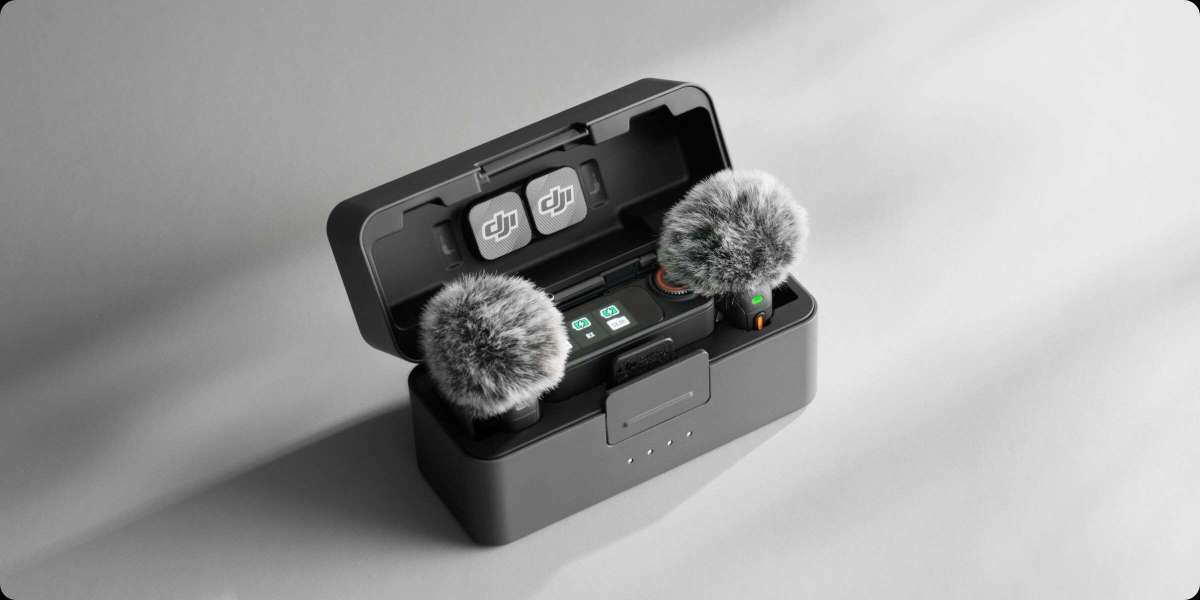
This is particularly important when working with non-professional subjects. Most people freeze up when they see a big microphone and a tangle of cables. By using small, discreet transmitters that clip onto a lapel or hide under a collar, we can make the technology disappear. This leads to more genuine interviews, more relaxed body language, and a more authentic connection. The best gear is the gear that your subject forgets is even there. It makes the vlog camera an extension of the moment rather than a disruption.
Proximity and Intimacy: The Power of 32-bit Float
The "secret sauce" of great audio is proximity. The closer the microphone is to the source, the better the signal-to-noise ratio. Wireless lapel systems allow us to maintain this proximity regardless of where the camera is. You can have a wide, sweeping shot of a person standing on a cliffside, yet their voice sounds as clear as if they were sitting right next to you.
This creates a powerful cinematic effect. It allows the visual to be grand and expansive while the audio remains intimate and personal. This contrast is a hallmark of high-end filmmaking that is now accessible to anyone. It allows us to play with scale without sacrificing the core of our message. By keeping the mic close and the camera far, we create a sense of "subjective reality" that draws the viewer deep into the world of the subject. Modern features like 32-bit float internal recording provide a safety net, ensuring that even if the speaker shouts or the wind picks up, the data is preserved without clipping.
The Synergy of Audio and Motion Stabilization
No piece of gear exists in a vacuum. To get the best results, you have to think about how your audio tools interact with your visual tools. In 2026, the ecosystem is more integrated than ever. Your microphone, your camera, and your stabilization tools all need to work together to create a cohesive experience. If you have perfectly smooth video but shaky, wind-blasted audio, the dissonance will pull the viewer out of the story.
A common challenge for creators is managing the "bulk" of their gear. As cameras have gotten smaller and more powerful, we want our audio solutions to follow suit. The trend is toward modularity—systems that can be clipped on, magnetically attached, or hidden away in seconds. This allows for a "stealth" approach to content creation where the gear doesn't intimidate the people around you. It’s about building a kit that is as agile as your creative vision.
The Symbiosis of Sound and Motion
There is a rhythm to great video. When the camera moves, the sound should feel like it is moving with it. If you are using a stabilizer to do a slow "push-in" on a subject, the audio should feel equally focused. This is where the choice of microphone placement becomes vital. By using a wireless lapel, you ensure that the audio perspective remains consistent even as the visual perspective changes.
If you were to use a microphone mounted on top of the camera, the sound would change as you move closer or further away from the subject. This can be a cool effect if used intentionally, but for most storytelling, it’s a distraction. By keeping the mic on the person, you anchor the voice in the frame, allowing the camera to dance around them without breaking the sonic connection. It’s a subtle but powerful way to enhance the professional feel of your work.
Managing Multiple Inputs for Collaborative Stories
Storytelling is rarely a solo endeavor. Whether you are conducting an interview or filming a group of people, you often need to capture more than one voice. The standard has moved from single-channel receivers to dual-channel systems that can handle two transmitters simultaneously. This allows for a "stereo" or "split-mono" recording where each person’s voice is on a separate track.
This is a huge advantage during the editing process. It allows you to adjust the volume of each person independently, or apply different EQ settings if one person has a much deeper voice than the other. It also allows you to "duck" one person while the other is speaking, creating a clean, professional dialogue. In the fast-paced world of 2026, having this level of control in the field saves hours of work in the studio. It’s about working smarter, not harder.
Energy Sovereignty: Powering the Remote Studio
As we move further away from traditional studios, the most significant bottleneck isn't the camera or the microphone—it is the electricity required to keep them running. A professional field kit in 2026 is a complex ecosystem of high-draw devices, from 8K cameras and LED panels to wireless receivers and editing laptops. To maintain creative momentum, a creator must transition from being a passive consumer of energy to a sovereign manager of it.
The move toward silent, battery-based units has changed the choreography of the field shoot. We used to have to run hundreds of feet of extension cords to keep a noisy gas engine away from the microphones. Today, we can keep a high-capacity power unit right next to our gear without any acoustic interference. This immediate access to stable electricity allows for much faster setup times and a more organized production environment. It provides the stability of a grid connection in the middle of nowhere, allowing you to run high-draw devices like specialized studio lights without compromise.
Managing Your Energy Budget in the Field
In the field, you must be a disciplined manager of your resources. This means identifying which devices are essential and which are luxuries. Just as a director manages a shot list, a producer must manage the "watt-list." Every percentage point of efficiency matters when you are miles from the nearest road. Using direct DC ports—like USB-C Power Delivery—bypasses the conversion loss of an AC inverter, allowing your gear to run significantly longer on the same charge.
Thermal management is also part of this energy strategy. Batteries are sensitive to temperature; extreme heat can trigger a safety shut-off, while extreme cold can cause a battery to lose its effective capacity almost instantly. Keeping your power unit in a shaded, ventilated area or using a thermal blanket in sub-zero conditions ensures that the power delivery stays consistent. This proactive approach to power management is a skill that separates seasoned field producers from novices, ensuring that the "low battery" warning never dictates the end of a shoot.
The Future of Auditory Storytelling
As we look toward the horizon, the way we consume audio is changing. We are moving away from simple stereo and toward "spatial audio" and immersive environments. This creates new challenges and opportunities for creators. How do we capture a voice that feels like it’s coming from a specific point in 3D space? How do we use environmental sound to make the viewer feel like they are truly "there"?
The tools are already starting to adapt. We are seeing microphones that can capture 360-degree soundscapes, and software that can "place" a voice within a virtual environment. This is the next frontier of content creation. It’s about moving from "watching a video" to "experiencing a world." While the fundamentals of a good voice recording will never change, the ways we present that voice are becoming more sophisticated and exciting every year. When you use a professional camera stabilizer in tandem with these auditory tools, the immersion becomes absolute.
Ultimately, the goal of any technical setup is to disappear. We use these sensors and transmitters to remove the distance between our ideas and the people we want to reach. When the technology works perfectly, it becomes invisible, leaving nothing but a clear, human voice in the listener's ear. It’s a beautiful thing to be able to share a voice with the world, and it’s a privilege to have the tools to do it with such clarity. As you continue to refine your craft, remember that the most important element of any recording is the perspective, empathy, and curiosity you bring to the lens. The gear is just there to make sure the world can hear you clearly.