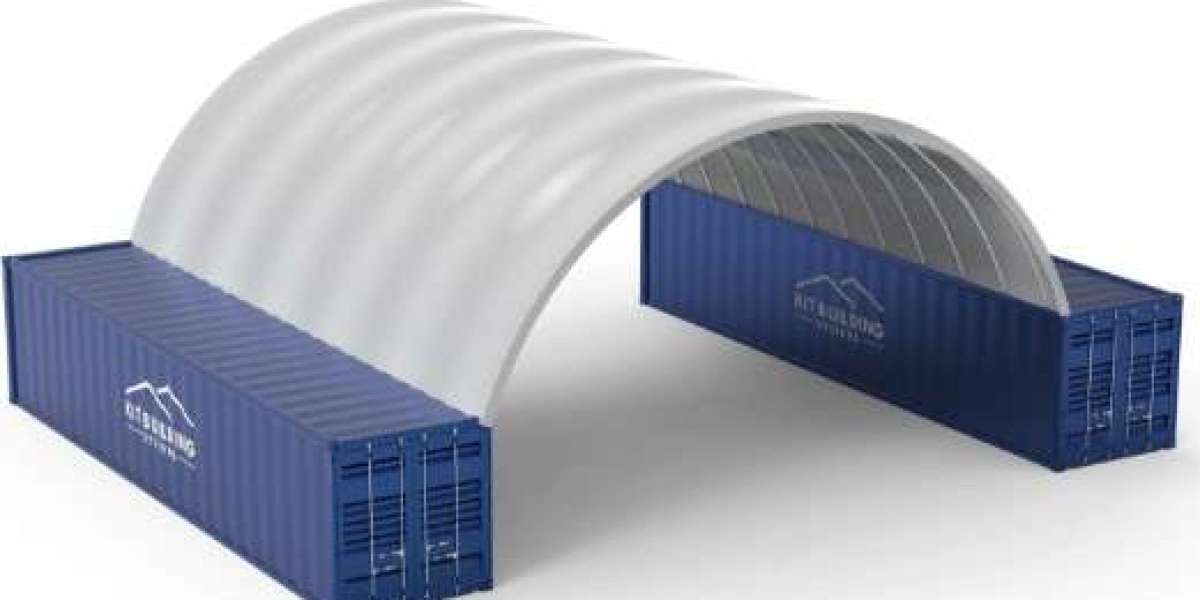

In today’s fast-paced industrial, commercial, and logistical environments, maximizing available space is not just a preference—it is a necessity. Businesses across construction, warehousing, agriculture, events, and disaster response are constantly seeking flexible, scalable, and cost-effective solutions. One innovation that continues to gain momentum is the Container Tent system.
A Container Tent provides a practical and efficient way to expand usable space without the need for permanent construction. By combining shipping containers with a durable fabric or PVC roof structure, organizations can create protected areas quickly and economically. This article explores how Container Tent systems maximize space efficiency, their benefits, practical applications, and best practices for implementation.
Understanding the Container Tent System
A Container Tent is a modular shelter structure installed between two shipping containers or mounted onto a single container wall. The containers act as the structural support base, eliminating the need for traditional foundations or steel frames in many cases. The fabric roof spans across the containers, forming a covered area that can be used for storage, workspace, equipment protection, or event space.
The brilliance of the Container Tent design lies in its simplicity. Standard shipping containers are widely available, structurally strong, and easily transportable. When combined with a high-quality tensile roof system, they create a secure, weather-resistant space in a fraction of the time required for conventional buildings.
Why Space Efficiency Matters
Before diving deeper into Container Tent systems, it is important to understand why space optimization is critical:
Rising real estate costs make expansion expensive.
Construction timelines can delay business growth.
Seasonal demand requires flexible space solutions.
Urban and industrial zones often have limited available land.
Temporary projects need non-permanent structures.
A Container Tent addresses each of these challenges by providing rapid, scalable expansion without permanent infrastructure.
How Container Tent Systems Maximize Space
1. Utilizing Existing Containers
Many businesses already use shipping containers for storage or transport. Instead of placing containers separately across a yard, a Container Tent connects them to form a unified, protected structure. This integration transforms underutilized space between containers into functional covered areas.
Rather than expanding outward, businesses expand intelligently by converting gaps into productive zones.
2. Eliminating the Need for Foundations
Traditional buildings require extensive groundwork, including excavation, concrete foundations, and permits. A Container Tent typically uses the containers themselves as structural anchors, significantly reducing site preparation requirements.
This not only speeds up installation but also allows businesses to use land that may not be suitable for permanent construction.
3. Modular and Scalable Design
One of the strongest advantages of a Container Tent system is scalability. Companies can:
Add more containers to extend the length.
Install multiple units side by side.
Relocate and reconfigure structures as needed.
This modular design ensures that businesses only use and pay for the space they require at any given time.
4. Vertical and Horizontal Optimization
Containers provide vertical storage potential, while the tented section creates open horizontal space. This hybrid configuration maximizes both dimensions efficiently. The open central area allows for:
Forklift movement
Equipment storage
Workstations
Temporary production lines
By combining enclosed container storage with open-span coverage, a Container Tent system delivers exceptional spatial efficiency.
Key Benefits of Container Tent Systems
Cost-Effective Expansion
Permanent construction involves high material costs, labor expenses, engineering fees, and lengthy approval processes. A Container Tent dramatically lowers these barriers. Since containers are standardized and the roofing system is prefabricated, costs remain predictable and manageable.
Businesses can allocate capital more strategically rather than locking funds into permanent buildings.
Rapid Deployment
Speed is crucial in industries like disaster relief, military operations, and seasonal retail. A Container Tent can often be installed within days rather than months. This quick deployment enables businesses to respond to demand spikes or emergency needs immediately.
Portability and Flexibility
Unlike fixed buildings, a Container Tent can be dismantled and relocated. For construction companies working on temporary project sites, this flexibility is invaluable. Once the project ends, the structure moves to the next location.
Weather Protection
High-quality Container Tent systems are engineered with durable, weather-resistant fabrics. They offer protection from:
Rain
UV exposure
Snow loads
Wind conditions
This ensures that equipment, inventory, and personnel remain protected throughout the year.
Sustainability and Reusability
Repurposing shipping containers promotes sustainable practices. Instead of manufacturing new building materials, businesses reuse existing steel structures. The modular nature of a Container Tent also reduces construction waste compared to traditional building methods.
Practical Applications of Container Tent Systems
Construction Sites
Construction projects often require temporary storage and sheltered work areas. A Container Tent provides secure storage for tools and materials while creating a covered workspace for assembly or fabrication.
Warehousing and Logistics
During peak seasons, warehouses struggle with overflow inventory. Installing a Container Tent adjacent to an existing facility creates additional covered storage without expanding the main building.
Agriculture
Farmers use Container Tent systems for:
Equipment storage
Feed protection
Livestock shelter
Crop storage
The adaptability of a Container Tent makes it ideal for seasonal agricultural needs.
Industrial Operations
Manufacturing facilities often require temporary expansion during production surges. A Container Tent can serve as a staging area, quality control space, or raw material storage zone.
Events and Commercial Use
Event organizers benefit from the quick setup and professional appearance of a Container Tent. It can function as a ticketing booth, merchandise area, dining space, or temporary exhibition hall.
Design Considerations for Maximum Efficiency
To fully leverage a Container Tent system, careful planning is essential.
Assess Space Requirements
Evaluate the intended use of the structure. Consider:
Equipment dimensions
Vehicle access
Inventory volume
Workflow patterns
Proper planning ensures the Container Tent enhances productivity rather than creating congestion.
Choose High-Quality Materials
Not all tent systems are equal. Durable PVC covers, corrosion-resistant steel frames, and reinforced anchoring systems ensure longevity and safety.
Ensure Proper Ventilation
For industrial or agricultural use, ventilation is crucial. Adding side panels, vents, or roll-up doors improves airflow and maintains a safe working environment.
Consider Lighting and Accessibility
Natural light can be enhanced with translucent roofing panels. Wide access doors and clear span interiors maximize usability.
Comparing Container Tent Systems to Traditional Buildings
Feature | Container Tent | Traditional Building |
Installation Time | Days | Months |
Cost | Lower | Higher |
Portability | High | None |
Foundation Required | Minimal | Extensive |
Scalability | Modular | Limited |
The flexibility and speed of a Container Tent make it a superior solution for many temporary or semi-permanent needs.
Safety and Compliance
Safety should never be compromised. When installing a Container Tent, consider:
Local building regulations
Wind and snow load ratings
Proper anchoring techniques
Fire safety measures
Working with experienced suppliers ensures compliance and structural reliability.
Long-Term Value and ROI
Although often considered temporary, a Container Tent can deliver long-term value. Its durability and adaptability allow businesses to use the system repeatedly across multiple projects or seasons.
The return on investment becomes evident through:
Reduced storage costs
Increased operational efficiency
Faster project completion
Improved asset protection
By maximizing existing space and minimizing capital expenditure, the Container Tent provides a strategic advantage.
Future Trends in Container Tent Solutions
As industries prioritize sustainability and flexibility, the demand for Container Tent systems is expected to grow. Emerging innovations include:
Solar-integrated roofing
Enhanced insulation systems
Smart ventilation technologies
Custom branding options
These advancements will further improve efficiency, comfort, and energy performance.
Conclusion
Maximizing space efficiency is no longer optional in competitive industries. Businesses must adopt adaptable, scalable, and cost-effective solutions to remain agile. A Container Tent system offers precisely that.