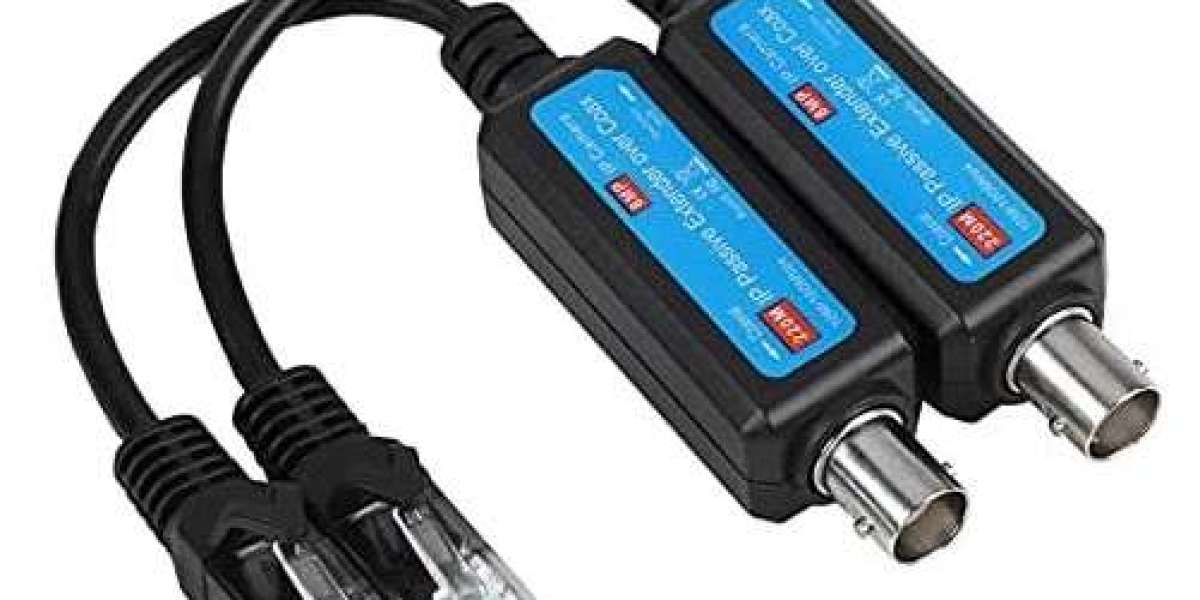

In today’s fast-evolving industrial landscape, reliable data transmission is no longer optional—it is mission-critical. From factory automation and smart surveillance to oil and gas facilities and transportation networks, industries depend on stable, secure, and high-performance communication systems. Among the most practical and cost-effective solutions available today are IP coaxial transmission systems. At the heart of these systems lies the powerful and versatile IP Coaxial Transmitter, a technology that bridges traditional coaxial infrastructure with modern IP-based networks.
This article explores the industrial applications of IP coaxial transmission systems, their benefits, working principles, and why the IP Coaxial Transmitter is becoming a preferred solution across multiple sectors.
Understanding IP Coaxial Transmission Systems
IP coaxial transmission systems are designed to transmit digital IP signals over existing coaxial cable infrastructure. Traditionally, coaxial cables were used primarily for analog video signals in CCTV systems. However, with advancements in networking technology, these cables can now support high-speed Ethernet data transmission through specialized devices such as the IP Coaxial Transmitter.
An IP Coaxial Transmitter converts Ethernet signals into formats that can travel efficiently over coaxial cables. At the receiving end, the signal is converted back to standard Ethernet. This allows industries to upgrade to IP-based systems without replacing existing coaxial wiring.
Why Industries Prefer IP Coaxial Transmission Systems
1. Cost Efficiency
Replacing existing infrastructure in industrial environments can be expensive and disruptive. Many facilities already have extensive coaxial cable networks installed decades ago. Using an IP Coaxial Transmitter allows companies to leverage existing wiring while upgrading to modern IP systems, significantly reducing capital expenditure.
2. Extended Transmission Distance
Industrial sites such as warehouses, refineries, and manufacturing plants often cover vast areas. IP coaxial transmission systems can deliver IP signals over long distances—often exceeding standard Ethernet cable limits—making them ideal for large-scale operations.
3. Enhanced Reliability
Coaxial cables are well-known for their durability and resistance to electromagnetic interference (EMI). This makes IP coaxial transmission systems highly reliable in environments with heavy machinery, high voltage equipment, or extreme conditions.
4. Seamless Integration
The IP Coaxial Transmitter supports integration with modern IP cameras, access control systems, and industrial monitoring devices, ensuring compatibility with contemporary technologies.
Key Industrial Applications
1. Manufacturing and Factory Automation
Modern factories rely heavily on network-connected devices for automation, quality control, and monitoring. Industrial environments often feature harsh conditions, including vibration, dust, and electrical interference.
IP coaxial transmission systems are ideal for:
IP-based machine vision systems
Real-time monitoring of production lines
Integration with industrial IoT (IIoT) sensors
Remote diagnostics and maintenance
An IP Coaxial Transmitter enables factories to convert legacy CCTV setups into advanced IP surveillance systems without rewiring the entire facility. This reduces downtime and maintains operational continuity.
2. Oil and Gas Facilities
Oil refineries, offshore rigs, and pipeline networks demand robust communication systems capable of withstanding extreme temperatures and hazardous conditions.
In these environments, the IP Coaxial Transmitter offers several advantages:
Long-distance transmission across expansive facilities
Resistance to electromagnetic interference
Reliable video monitoring for safety compliance
Secure communication channels for critical data
Many oil and gas installations already have coaxial infrastructure in place. Upgrading to IP-based surveillance and monitoring systems using IP coaxial transmission systems provides a safer and more cost-effective solution.
3. Power Plants and Energy Sector
Power generation facilities, including thermal, hydroelectric, and renewable energy plants, require constant monitoring and data exchange. These environments often contain high-voltage equipment that can disrupt standard Ethernet connections.
IP coaxial transmission systems are less susceptible to interference and can transmit signals reliably in such conditions. The IP Coaxial Transmitter ensures:
Continuous surveillance of critical assets
Monitoring of transformers and switchgear
Integration with SCADA systems
Secure remote access
This technology supports operational efficiency while maintaining high safety standards.
4. Transportation Infrastructure
Transportation hubs such as airports, railway stations, seaports, and highways depend on surveillance and communication systems for security and operational management.
For example, large-scale international hubs like Heathrow Airport or Los Angeles International Airport rely on extensive video monitoring systems that must function flawlessly.
IP coaxial transmission systems play a critical role by:
Upgrading legacy CCTV to IP surveillance
Supporting traffic monitoring systems
Enhancing perimeter security
Providing reliable connectivity across large areas
Using an IP Coaxial Transmitter minimizes the need for disruptive rewiring projects in active transportation environments.
5. Smart Cities and Urban Surveillance
As cities adopt smart technologies, the need for scalable and efficient communication networks grows. Many municipalities have existing coaxial-based surveillance infrastructure installed years ago.
Instead of replacing these systems entirely, authorities can deploy IP coaxial transmission systems to modernize their networks. The IP Coaxial Transmitter supports:
High-definition IP camera integration
Centralized control rooms
Real-time public safety monitoring
Intelligent traffic management systems
This approach reduces installation time and allows gradual system upgrades without major disruptions.
6. Industrial Warehousing and Logistics
Warehouses and distribution centers operate around the clock and require robust security and inventory tracking systems.
IP coaxial transmission systems help:
Connect IP cameras across large storage areas
Enable automated inventory monitoring
Support barcode and RFID systems
Provide remote access for facility managers
With an IP Coaxial Transmitter, warehouse operators can expand or upgrade surveillance systems without installing new Ethernet cables across high ceilings or storage racks.
Technical Advantages of the IP Coaxial Transmitter
High Bandwidth Capability
Modern IP coaxial transmission systems can support high-definition and even ultra-high-definition video streams. The IP Coaxial Transmitter ensures stable bandwidth for multiple IP devices operating simultaneously.
Power over Coax (PoC)
Some advanced systems allow power and data transmission over a single coaxial cable. This reduces the need for additional power lines and simplifies installation in industrial settings.
Plug-and-Play Installation
Industrial environments require minimal downtime. The IP Coaxial Transmitter is often designed for quick installation, enabling seamless upgrades without interrupting operations.
Enhanced Security
Cybersecurity is a growing concern in industrial systems. IP coaxial transmission systems support encrypted communication protocols, protecting sensitive operational data from unauthorized access.
Comparing IP Coaxial Systems with Fiber and Ethernet
While fiber optics offer high-speed data transmission, installation can be costly and time-consuming in established industrial sites. Ethernet cables, on the other hand, have distance limitations and may be vulnerable to interference.
IP coaxial transmission systems provide a balanced solution:
Lower installation costs compared to fiber
Longer transmission distances than standard Ethernet
Greater durability in harsh environments
Compatibility with existing infrastructure
The IP Coaxial Transmitter serves as a practical bridge between legacy systems and modern IP networks.
Future Trends in Industrial Communication
As Industry 4.0 continues to expand, industrial communication systems must support higher data loads, artificial intelligence applications, and predictive maintenance technologies.
IP coaxial transmission systems are evolving to support:
Higher data speeds
Advanced encryption standards
Integration with cloud-based monitoring platforms
Compatibility with edge computing devices
The IP Coaxial Transmitter will continue to play a vital role in helping industries transition smoothly into fully digital ecosystems.
Best Practices for Implementing IP Coaxial Transmission Systems
To maximize performance and reliability, industries should:
Conduct a comprehensive infrastructure audit.
Choose high-quality IP Coaxial Transmitter devices.
Ensure proper grounding and shielding.
Implement strong network security protocols.
Plan for future scalability.
Careful planning ensures long-term efficiency and return on investment.
Conclusion
Industrial operations demand reliable, cost-effective, and scalable communication solutions. IP coaxial transmission systems offer a practical way to modernize legacy infrastructure without extensive rewiring. By utilizing an IP Coaxial Transmitter, industries can upgrade to high-performance IP networks while maintaining operational continuity.