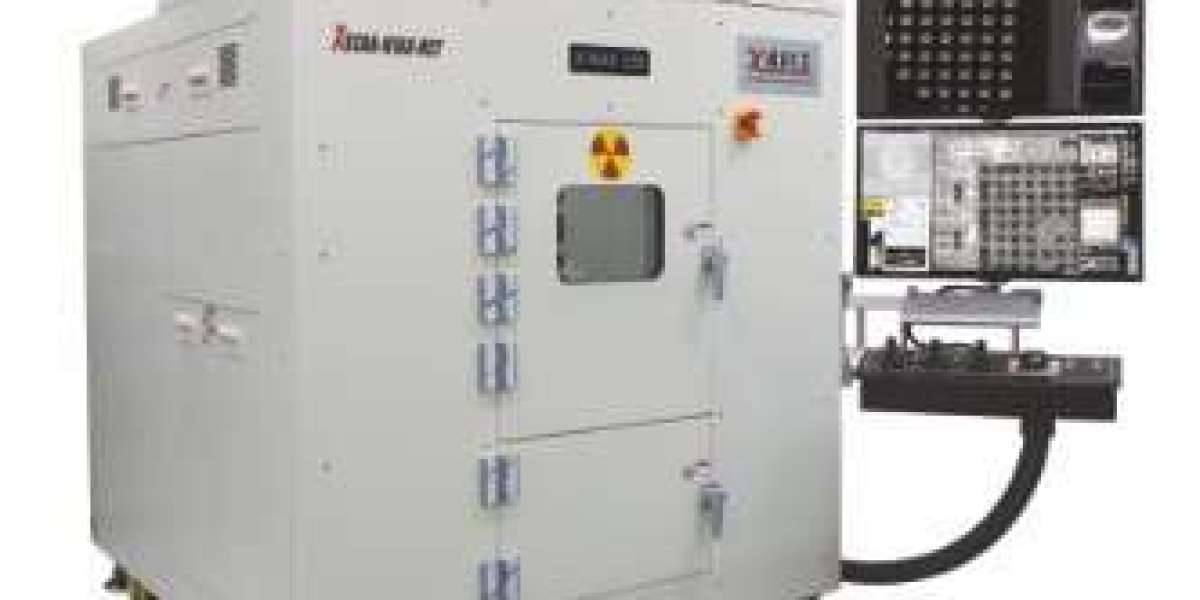

In today’s highly competitive manufacturing landscape, quality control is no longer optional—it is essential. Industries such as electronics, automotive, aerospace, medical devices, and advanced materials rely heavily on precise inspection technologies to maintain safety, reliability, and regulatory compliance. Among the most powerful tools available is the 3D X-Ray Inspection System.
Selecting the right 3D X-Ray Inspection System for your production line can significantly improve defect detection, reduce waste, enhance traceability, and protect your brand reputation. However, with multiple configurations, technical specifications, and pricing tiers available, making the right choice requires a clear understanding of your operational needs and long-term goals.
This comprehensive guide will help you evaluate the most critical factors to ensure you invest in the best 3D X-Ray Inspection System for your specific production requirements.
Why a 3D X-Ray Inspection System Matters
Traditional 2D inspection methods often fail to detect hidden defects such as voids, cracks, misalignments, and internal structural inconsistencies. A 3D X-Ray Inspection System uses computed tomography (CT) or laminography to create volumetric images of internal components, allowing manufacturers to detect flaws that are invisible to surface-level inspection tools.
Industries such as those following standards set by organizations like International Organization for Standardization rely on advanced inspection technologies to meet strict compliance requirements. A high-performance 3D X-Ray Inspection System ensures your products align with global quality benchmarks.
Key Factors to Consider When Choosing a 3D X-Ray Inspection System
1. Application and Industry Requirements
The first step in selecting a 3D X-Ray Inspection System is defining your application. Are you inspecting:
Printed circuit boards (PCBs)?
Automotive castings?
Aerospace turbine blades?
Medical implants?
Semiconductor packages?
For example, companies in the aerospace sector often comply with guidelines from Federal Aviation Administration, where inspection precision is critical for safety. Meanwhile, electronics manufacturers working with surface-mount technology require high-resolution imaging to detect solder joint defects and micro-voids.
Your industry determines the resolution, penetration power, and automation level required from your 3D X-Ray Inspection System.
2. Resolution and Image Quality
Resolution directly impacts defect detection accuracy. High-resolution imaging allows you to detect:
Micro-cracks
Voids in solder joints
Delamination
Internal fractures
If you are inspecting microelectronics or semiconductor components, you need sub-micron resolution. In contrast, automotive castings may require higher penetration power rather than extreme resolution.
The right 3D X-Ray Inspection System should balance image clarity with inspection speed to avoid production bottlenecks.
3. Production Volume and Throughput
Your production speed plays a crucial role in system selection. A high-volume production line requires:
Fast scanning speeds
Automated defect recognition (ADR)
Inline integration
Minimal operator intervention
Modern 3D X-Ray Inspection System models can be fully integrated into smart manufacturing environments aligned with Industry 4.0 principles. These systems offer real-time data collection, analytics dashboards, and integration with Manufacturing Execution Systems (MES).
If your facility follows digital manufacturing models promoted by organizations such as World Economic Forum in smart factory initiatives, investing in a scalable 3D X-Ray Inspection System will support future automation upgrades.
4. Inline vs. Offline Systems
You must decide whether you need:
Inline 3D X-Ray Inspection System – Integrated directly into your production line for continuous inspection.
Offline 3D X-Ray Inspection System – Standalone unit used for sampling or failure analysis.
Inline systems are ideal for high-volume environments, ensuring every product is inspected. Offline systems are suitable for R&D labs, prototyping, and detailed failure investigations.
Your workflow and quality assurance strategy will determine which configuration is most appropriate.
5. Automation and AI Capabilities
Advanced 3D X-Ray Inspection System solutions now incorporate artificial intelligence and machine learning algorithms for automated defect recognition. These features offer:
Faster inspection cycles
Reduced false positives
Consistent quality evaluation
Reduced dependency on skilled operators
AI-enhanced systems learn from historical defect data, continuously improving detection accuracy. This capability is particularly valuable in industries such as automotive manufacturing, where companies like Toyota Motor Corporation emphasize zero-defect production methodologies.
Automation also reduces labor costs while improving inspection consistency.
6. Safety and Regulatory Compliance
Radiation safety is a critical factor when implementing a 3D X-Ray Inspection System. Ensure the system:
Complies with national radiation safety standards
Includes shielding and interlock mechanisms
Meets workplace safety regulations
Provides operator training and certification
Manufacturers in the United States must follow guidelines established by agencies such as Occupational Safety and Health Administration.
Choosing a system with certified safety standards protects both employees and your organization from regulatory risks.
7. System Footprint and Facility Space
Space constraints often influence purchasing decisions. Before selecting a 3D X-Ray Inspection System, evaluate:
Available floor space
Power supply requirements
Ventilation needs
Environmental control conditions
Compact inline systems are ideal for crowded production floors, while larger CT-based systems may require dedicated inspection rooms.
Planning your facility layout carefully ensures seamless installation and minimal operational disruption.
8. Total Cost of Ownership
The initial purchase price is only one component of the investment. Consider:
Maintenance costs
Software upgrades
Training expenses
Replacement parts
Downtime risk
Service contracts
A reliable 3D X-Ray Inspection System from a reputable manufacturer may cost more upfront but can significantly reduce long-term operational costs by minimizing product recalls and scrap rates.
Evaluate ROI based on defect reduction, increased yield, and customer satisfaction.
9. Vendor Support and Expertise
Partnering with a trusted supplier is just as important as selecting the right equipment. Assess:
Technical support availability
On-site training services
Warranty coverage
Spare parts accessibility
System scalability
Choose a vendor with proven experience in your industry. A knowledgeable supplier will help you configure the 3D X-Ray Inspection System according to your exact production specifications.
10. Future Scalability
Manufacturing technologies evolve rapidly. Your chosen 3D X-Ray Inspection System should support:
Software updates
Hardware upgrades
Increased resolution modules
AI algorithm improvements
Integration with evolving automation systems
Future-proofing your investment ensures that your inspection capabilities grow alongside your production demands.
Benefits of Investing in the Right 3D X-Ray Inspection System
When properly selected and implemented, a 3D X-Ray Inspection System delivers measurable advantages:
Improved Product Quality
Detect hidden defects before products reach customers.
Reduced Scrap and Rework
Early detection minimizes waste and lowers material costs.
Enhanced Brand Reputation
Consistent quality strengthens customer trust and market credibility.
Regulatory Compliance
Meet global industry standards and avoid costly penalties.
Data-Driven Insights
Leverage inspection data for process optimization and continuous improvement.
Common Mistakes to Avoid
When selecting a 3D X-Ray Inspection System, avoid these common pitfalls:
Choosing based solely on price
Overlooking integration compatibility
Ignoring safety certifications
Underestimating training requirements
Failing to consider long-term scalability
A well-informed purchasing decision ensures operational efficiency for years to come.
Final Thoughts: Making the Right Decision
Choosing the right 3D X-Ray Inspection System is a strategic investment that directly impacts your product quality, operational efficiency, and regulatory compliance. By carefully evaluating your application requirements, production volume, automation needs, safety standards, and long-term scalability, you can select a solution that aligns perfectly with your manufacturing objectives.
In a world where precision and reliability define market leadership, implementing a high-performance 3D X-Ray Inspection System is not just a quality control upgrade—it is a competitive advantage.