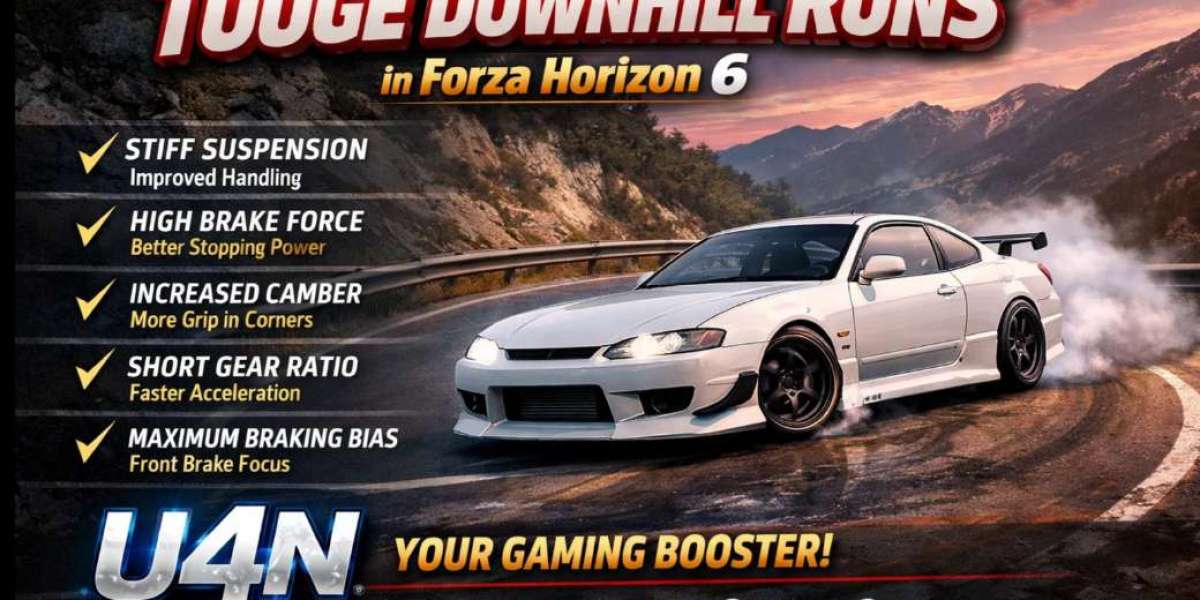

If you're looking to master downhill touge (mountain pass) runs in Forza Horizon 6, you're in the right place. Whether you're racing against others or simply improving your skills, getting your car setup right is crucial. In this article, we’ll break down how to approach tuning for those winding, downhill roads, using practical advice based on common player behavior and the mechanics of the game.
What Is a Touge Downhill Run in Forza Horizon 6?
A touge downhill run refers to a race or time trial where the track is a steep, twisty road descending through a mountain or similar terrain. These runs require precise control of your car, as the road curves and dips, and you’re often dealing with elevation changes and braking zones. In Forza Horizon 6, this kind of run is all about balancing speed, grip, and braking performance.
How Should I Approach Tuning for Downhill Runs?
Before you jump into the tuning menu, it's important to remember that downhill runs are about control and stability, not just raw speed. You want a car that can corner sharply without losing traction, maintain stability when braking, and handle high-speed stretches without oversteering. Here’s how to get started:
1. Suspension Setup: What’s the Best Suspension for Downhill Runs?
On a touge downhill, you'll face a lot of sharp turns and elevation changes, so getting your suspension right is key. The default Forza suspension settings are often too stiff or too soft for these types of roads.
Spring Rates: To keep your car stable without losing grip, go for slightly softer spring rates in the front and rear. A stiffer suspension can make the car harder to control on a downhill slope, especially on bumpy roads. Try setting your front springs to 700-900 lbs/in and your rear to 650-850 lbs/in.
Damping: The damping settings control how your suspension reacts to bumps. For downhill runs, you'll want to set the dampers a little stiffer to reduce body roll during tight cornering. However, you don’t want them too stiff, or your car will bounce, losing grip. A good starting point would be setting your front and rear dampers to around 9-12 clicks.
Ride Height: Lowering the ride height improves handling by lowering the car's center of gravity. In Forza Horizon 6, a good balance is to lower the car just enough so it doesn’t scrape the ground but remains responsive. Aim for about 4-6 inches of ground clearance in the front and rear.
2. Braking: How Should I Tune the Brakes for a Downhill Run?
Braking is crucial on downhill tracks because you’ll have to deal with both the weight of the car shifting forward as well as the steep inclines. You need to be able to slow down without losing control.
Brake Balance: On a touge downhill, brake balance plays a huge role. You want to adjust your brake balance towards the rear (slightly) so that the car is stable during heavy braking. Too much front brake bias, and your car will understeer. Start with a brake balance setting of 55% front and 45% rear, and adjust from there depending on your car’s feel.
Brake Pressure: In downhill runs, you don’t want your brakes to be too sensitive because the added weight on the front wheels from braking could make the car more prone to understeering. Set your brake pressure to around 90-95%. If you notice the car is locking up too often, reduce it slightly.
ABS: If you're using ABS, keep it on. It will help prevent wheel lockup in high-pressure braking zones on the downhill. However, if you’re comfortable with precise control, you can experiment with turning it off to get more control over the brakes.
3. Differential Settings: How Can I Fine-Tune the Diff for Better Control?
The differential settings control how your car's wheels spin during acceleration and braking. For downhill runs, you need to focus on ensuring the car stays stable under deceleration, especially when you're off-throttle through corners.
Deceleration Setting: Set the deceleration lock to around 60-70%. This helps prevent the car from losing grip when you’re braking and turning at the same time. Lower settings (50% or less) can cause the car to slide too much under braking.
Acceleration Setting: Keep your acceleration setting more neutral (around 50-60%). This ensures the car has enough stability when accelerating out of tight corners but isn’t too eager to lose traction.
4. Tires: Which Tires Are Best for Downhill Racing?
In Forza Horizon 6, tire choice plays a big role in how well your car grips during a downhill run. You’ll want tires that can handle the corners without being too grippy (which could cause understeering) or too loose (which could lead to oversteering).
For a balance between grip and performance, high-performance street tires are often a good choice. If you’re running a lighter car, you may get away with a medium compound for a bit more agility. Just avoid racing tires, as they tend to be too stiff and offer less feedback on a downhill course.
5. Power and Weight: How Much Power Is Too Much?
When it comes to power, it’s important to avoid over-powering the car, especially on a downhill run. Too much horsepower can lead to oversteering and an unstable car. You want enough power to keep up with the course but not so much that you lose control.
If you're driving a rear-wheel-drive car, make sure you have enough torque to accelerate out of turns but not so much that it’s difficult to control. Aim for a car with 350-600 horsepower, depending on its weight and handling characteristics. You’ll also want to make sure the weight is balanced. A car with too much weight at the rear will make the back end unstable.
6. Gear Ratios: Should I Adjust the Gearing for Downhill Runs?
Gear ratios might not seem as important in a downhill run, but they play a key role in how the car accelerates and decelerates. For downhill runs, you want the car’s gears to suit both high-speed stretches and tight corners.
Final Drive Ratio: A shorter final drive ratio (lower gear) will give you more acceleration on the sharp turns but less top speed. You’ll want to shorten it slightly, but not too much. Around 3.8 to 4.2 should be fine for most cars. This way, you can quickly accelerate out of corners without hitting the limiter too soon.
Individual Gears: For a tight course, reduce the top-end gears, but don’t make them so short that you’re shifting too much between turns. A balance is important, with an emphasis on gears that suit the curves rather than pure top speed.
What Are Some General Tips for Improving My Downhill Performance?
Once you've got your car dialed in, it’s all about practice. Here are a few extra tips to help you improve:
Focus on smooth inputs: Sudden steering or throttle inputs can make your car unstable, especially downhill. Work on being smooth with your inputs, particularly when braking into corners.
Learn to trail brake: In Forza Horizon 6, trailing the brake into corners allows you to maintain more stability while still shedding speed.
Know when to shift: Shift up before hitting a corner to keep the engine from over-revving. If you’re near a corner exit, shift down to maintain control without losing momentum.
Test different cars: Not all cars are made for touge runs. Try a few different types of cars, from light, agile ones like the Nissan 240SX to heavier ones like the Subaru WRX STI, to see what works best for your driving style.
How Do I Get the Best Deals on Cars for Touge Races?
If you're looking to get a specific car for touge downhill runs, you can check your Forza Horizon 6 Account instant delivery options for fast access to vehicles. This lets you buy and get cars delivered right to your account, saving time and effort if you’re trying to get a specific setup.
Tuning your car for downhill touge runs in Forza Horizon 6 is all about balance. With the right suspension, braking, tires, and gearing, you can tackle the twisty mountain roads with precision and control. Keep practicing, make adjustments as you learn the track, and experiment with different setups to find what works best for you.