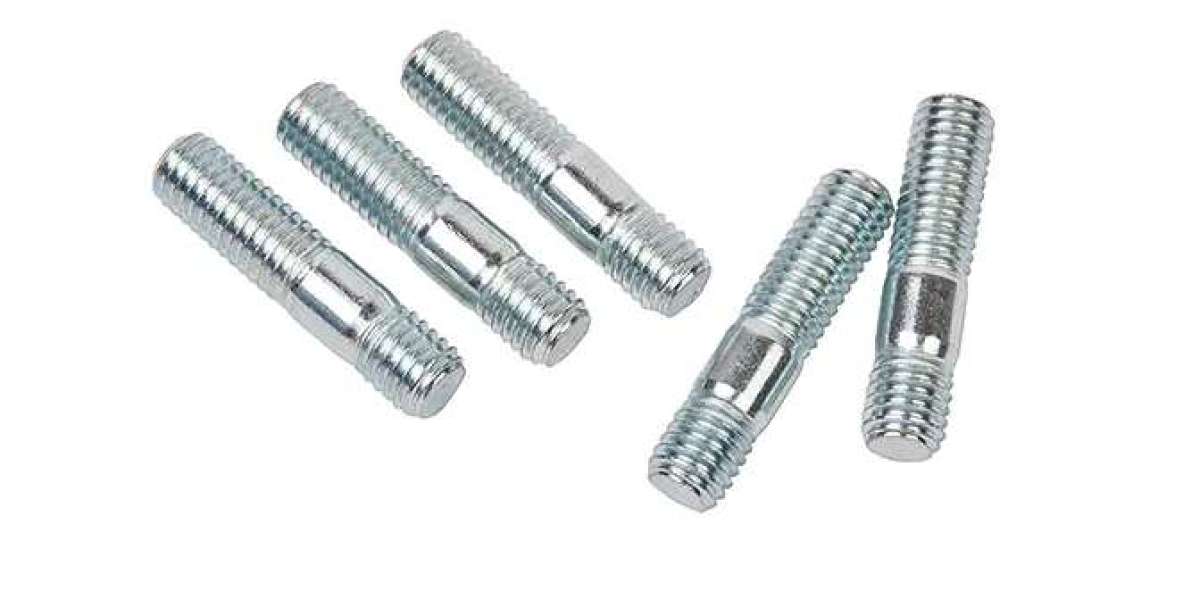

Walk into any serious machine shop, engine rebuild facility, or structural fabrication yard, and you'll find double-ended studs doing quiet, unglamorous work that holds entire systems together. These threaded fasteners — featuring threads on both ends of a cylindrical shank — solve connection problems that standard bolts simply cannot address cleanly or reliably.
Unlike a conventional bolt, a double-ended stud stays permanently anchored in one component. One threaded end screws firmly into a tapped hole in the base material, creating a fixed, stable post. The opposite threaded end then accepts a nut, which draws a mating component down tightly against the base. This two-stage clamping action distributes load far more evenly than a bolt rotating against a surface during tightening, reducing stress concentrations and extending joint life considerably.
Material selection for double-ended studs depends heavily on the application environment. Carbon steel double-ended studs handle general-purpose structural and mechanical work at reasonable cost. Alloy steel versions — often heat-treated to elevated tensile strength ratings — serve in demanding load-bearing situations. Stainless steel double-ended studs resist corrosion in marine, chemical processing, and food manufacturing environments where carbon steel would degrade rapidly. Titanium double-ended studs appear in aerospace and motorsport applications where weight reduction matters as much as strength.
Proper installation technique matters enormously. Double-ended studs should be driven in using a stud driver tool or a double-nut locking method rather than pliers or grips, which damage thread forms and compromise seating integrity. Installing double-ended studs to the correct torque and depth ensures full thread engagement on both ends, unlocking the genuine load-carrying capability these fasteners were engineered to deliver.